Why Did Bitcoin Surge? 5 Signals Behind the Latest Rally
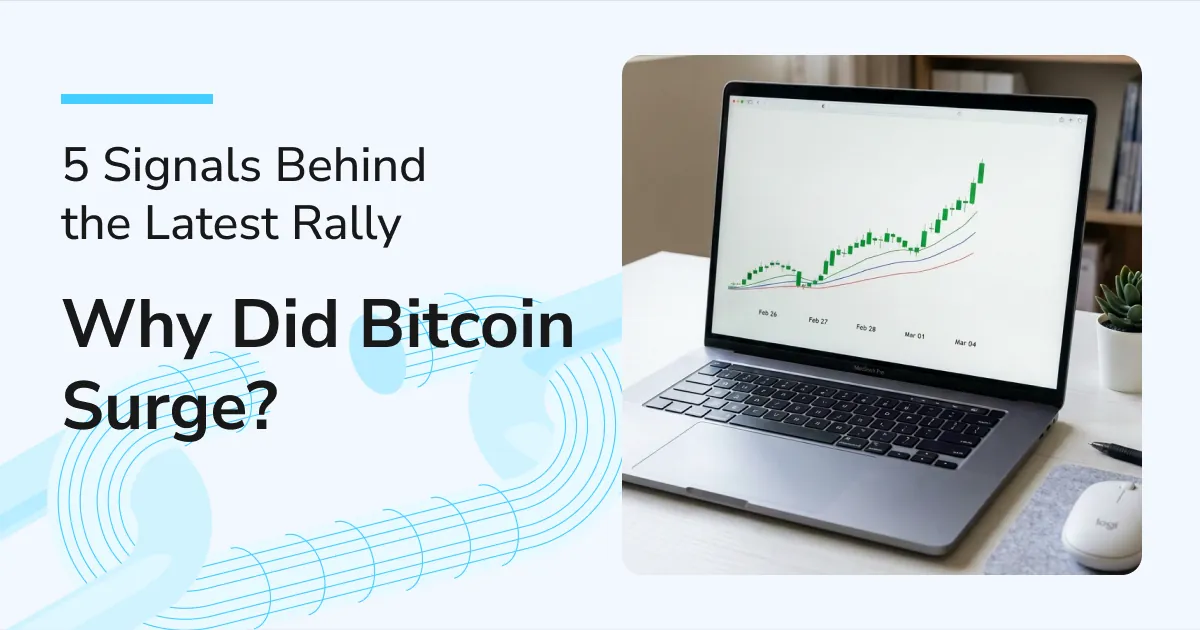
Why Did Bitcoin Surge? 5 Signals Behind the Latest Rally
As of September 1, 2026, Bitcoin had climbed back toward $80,000. The move was driven by several developments arriving at once: changing expectations for U.S. Treasury-market liquidity, crypto regulatory signals, renewed spot ETF inflows and short covering. Together, they brought a fresh wave of capital into what had been a relatively quiet market.
How large was the latest Bitcoin rally?
Bitcoin began breaking out around August 19. AP reported that it moved above $77,000 by August 21, while Morningstar calculated a 23.6% weekly gain—the strongest since March 2023—before Bitcoin later traded above $80,000.
Reason 1: Treasury buybacks changed liquidity expectations
On August 19, the U.S. Treasury said it would at least double the maximum size of liquidity-support buybacks for longer-dated nominal securities, from $2 billion to at least $4 billion per operation beginning September 9.
The measure was not directly related to Bitcoin, but markets could interpret it as a signal that might ease bond-market stress and improve dollar liquidity. When pressure from long-term rates falls, the dollar weakens or financial conditions are expected to loosen, gold, Bitcoin and other non-cash assets tend to attract more capital. This was one of the rally’s main catalysts.
Reason 2: Regulatory signals improved sentiment
On August 18, the SEC proposed Regulation Crypto Assets, a framework for certain investment contracts involving crypto assets. U.S. crypto-market-structure legislation also returned to the center of political discussion.
For institutions, the prospect of a clearer compliance path can reduce some uncertainty and improve short-term risk appetite. The policy signals and Treasury-market news arrived together, making it easier for sidelined capital to return.
Reason 3: Spot Bitcoin ETF inflows returned
Farside Investors’ daily data showed net inflows on most U.S. trading days from August 17 through August 27. Net inflows were approximately $517 million on August 19 and $606 million on August 20, followed by another roughly $217 million on August 31.
ETF inflows are evidence of demand through regulated investment products, but one day does not establish a lasting trend. August 28, for example, recorded roughly $202 million of net outflows. A multiweek cumulative view is more useful than a single large print.
Reason 4: Short covering created a squeeze
AP, citing CoinGlass, reported that more than $4 billion in bearish crypto positions were liquidated during the rally. When leveraged shorts are forced to close, traders must buy back the asset. That extra buying can push prices higher, trigger more liquidations and create a feedback loop.
A short squeeze explains the speed of the rally, but it does not automatically represent durable fundamental demand. Once forced buying ends, prices can retrace if fresh spot demand does not take over.
Reason 5: Momentum reversed after a prolonged slump
Bitcoin had fallen from around $95,000 early in 2026 to below $60,000 by late June. That decline left bearish positioning and sidelined capital in the market. When macro news, policy signals and ETF flows turned together, a breakout attracted trend followers and investors afraid of missing the move.
The rally therefore combined fundamental signals—liquidity, regulation and ETF demand—with market-structure effects such as liquidations, technical breakouts and FOMO.
What could show whether the rally is durable?
Watch five things: sustained multiweek ETF inflows; the direction of the dollar and long-term Treasury yields; spot volume versus derivatives-led activity; buying support on pullbacks; and whether regulatory proposals become binding rules rather than political signals.
If price rises while ETF flows, spot volume and policy progress fade, the move is more likely to be a sharp rebound than a new long-term trend.
Should investors chase Bitcoin after a surge?
A reasonable explanation for a rally does not mean the asset is inexpensive. After a fast move, profit-taking, crowded leveraged longs and reversals in macro expectations can all increase downside risk. Investors should decide their maximum acceptable loss, position size and holding period before entering, and should not use emergency savings or borrowed money.
Beginners can also spread purchases over time to reduce entry-timing risk. Dollar-cost averaging can diversify purchase dates, but it cannot remove Bitcoin's volatility or loss risk.
Frequently asked questions
Why did Bitcoin surge so suddenly?
Treasury-market liquidity expectations, improving regulatory signals, spot ETF inflows and forced short covering arrived together. The short squeeze amplified the move but was not the only cause.
Do ETF inflows guarantee a higher Bitcoin price?
No. ETF flows are one demand indicator. Selling by existing holders, derivatives positioning, the dollar, interest rates and overall risk sentiment also affect price.
What is a short liquidation?
A leveraged trader betting on lower prices can be forcibly closed when collateral becomes insufficient. Closing the short requires buying the asset, which can add upward pressure.
Must Bitcoin fall after a surge?
No, but short-term volatility often increases. The key question is whether sustained spot demand replaces forced buying and momentum trading.
Conclusion
The late-August Bitcoin surge reflected several forces at once: Treasury liquidity signals and regulatory developments improved sentiment, ETF inflows brought spot demand back, and short covering amplified the speed. The most useful indicators now are cumulative ETF flows, spot-market participation, the dollar and yields, and whether policy proposals become final rules.
What is ZONE Wallet?
ZONE Wallet is a Taiwan-based virtual asset exchange, allowing beginners to buy and sell easily with a single click. Combined with our dollar-cost averaging (DCA) feature, you can enjoy flexible, value-driven investment results!
ZONE Wallet also offers corporate account services with a fast and secure onboarding process. We help startups and enterprises leverage stablecoins to optimize cross-border payment workflows and reduce transaction costs. ZONE Wallet makes asset allocation more reliable for both personal financial management and corporate treasury strategies—helping you effortlessly navigate the future of Web3!
Digital assets involve significant price and liquidity risk. This article is for education and market information only and is not financial advice.