New Business Payment Trends: Modernized Payment Methods Boost Business Growth
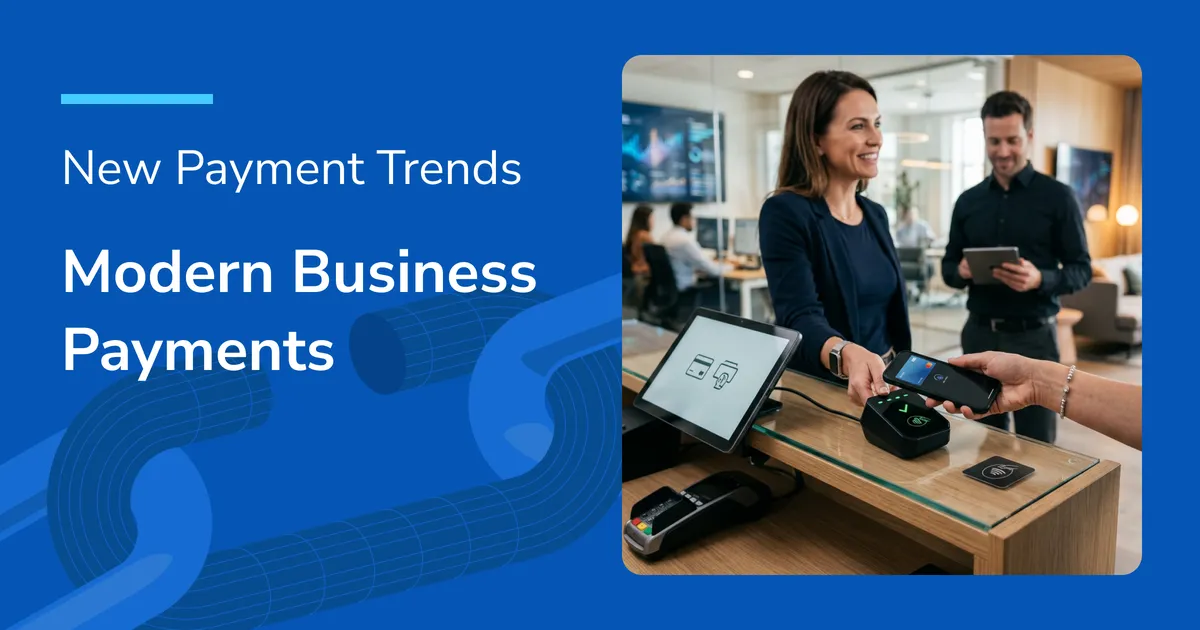
With the advancement of the digital wave, traditional business payment methods have failed to fully meet the needs of the modern business environment. Whether it's cross-border transactions, supplier payments, or employee payroll distribution, business owners are looking for more efficient, secure, and lower-cost payment solutions. This article takes a deep dive into a variety of innovative business payment channels to help you find the most modern payment method that best suits your business needs.
Challenges faced by traditional business payment methods
Most businesses still rely on traditional methods such as bank transfers and cheque payments to handle everyday transactions, but these methods expose many limitations in today's fast-paced business environment. Long processing times, costly processing, complex cross-border payments, and a lack of real-time tracking are bottlenecks for business efficiency.
ZONE Wallet Provides Enterprise-Grade Stablecoin Payment Solutions
Streamline workflows and reduce transaction costs.
Fill Out the Consultation FormSMEs in particular need to pay more urgently, as liquidity is crucial to their survival. Delays in traditional payment methods can affect supply chain operations, damaging customer relationships and market competitiveness. In addition, the lack of an integrated financial management system increases the complexity of accounting.
Digital Payment Platforms: A New Option for Small Business Payments
Digital payment platforms revolutionize small business payments, providing more flexible and fast money management solutions. These platforms often have user-friendly interfaces that make it easy for business owners from non-technical backgrounds to operate.
- Instant Transfer: Pay immediately after payment, improve cash flow management
- Batch Payment: Can process multiple transactions at the same time, saving manpower costs
- Multi-Currency Support: Simplify the exchange rate conversion process for cross-border business
- Transaction History Tracking: Provides detailed payment history and status updates
- API Integration: SEAMLESSLY CONNECTS TO EXISTING ERP OR ACCOUNTING SYSTEMS
Comparison of major digital payment platforms
| Platform Type | Processing Time | Fee Rate | Use Case |
|---|---|---|---|
| Third-Party Payment | Instant - 24 hours | 0.5%-3% | Domestic B2B Transactions |
| Digital Wallet | Instant | 0.3%-2.5% | Small, Frequent Payments |
| Blockchain Payment | 10 minutes - 2 hours | 0.1%-1% | Cross-border, Large-Value Transactions |
| Bank Digital Account | Instant - Next day | 0.1%-1.5% | Digitization of Traditional Business |
Innovative Enterprise Payment Methods Analysis
Modern business payment methods are constantly evolving, from basic electronic transfers to smart contract automatic payments. Each method has its own unique advantages, and businesses should choose the most appropriate payment channel based on transaction nature, amount size, and timeliness requirements.
Virtual Account Payment System
Virtual accounts provide businesses with a dedicated payment channel, especially for business scenarios that require precise capital flows. Each virtual account independently tracks the flow of funds, simplifying reconciliation and improving financial transparency. This approach is especially popular with ecommerce platforms and service-based businesses.
Main advantages:
- Precise capital inflow management
- Simplified settlement process
- Enhance Financial Transparency
- Reducing the risk of manual errors
Automated payment for smart contracts
Blockchain-based smart contracts enable conditional automatic payments that automatically execute transactions when default conditions are met. This approach is particularly suitable for complex transaction scenarios that require multi-party confirmation, such as supply chain finance, project milestone payments, and significantly reducing the risk of human intervention and disputes.
Applicable Scenarios:
- Supply Chain Finance
- Project Milestone Payments
- Periodic automatic payment
- Multi-Party Conditional Trading
Enterprise Payment Channel Selection Guide
Choosing the right business payment channel requires a comprehensive consideration of several factors, including transaction frequency, amount size, geographic scope, and security requirements. Businesses of different sizes tend to have different priorities, with large enterprises focusing on system integration capabilities, and SMEs focusing more on cost efficiency and ease of operation.
- Transaction cost analysis: Compare fixed and variable costs for each pipeline
- Processing Speed Assessment: Choose the appropriate check-in time according to the urgency of your business
- Security Checks: Verify that the payment channel has the necessary security credentials
- System Compatibility: Assess the difficulty of integrating with existing financial systems
- Customer Support: Ensure timely technical assistance and problem resolution
SME Payment Pipeline Assessment Highlights
The choice of payment systems for SMEs needs to be carefully evaluated due to budget constraints and relatively limited human resources. It is recommended to prioritize payment channels that are simple to operate, cost transparent and with good customer service support. At the same time, the platform chosen should be future-proofed and scalable as your business grows.
| Evaluation Item | Key Consideration | Recommended Direction |
|---|---|---|
| Cost Structure | Transparent and predictable | Choose a fixed rate or a clearly defined tiered fee structure |
| Ease of Use | User-friendly for employees | Prioritize platforms with an intuitive user interface |
| Customer Support | Resolve issues promptly | Confirm availability of local language (e.g., Chinese) support and real-time assistance |
| Scalability | Grows with the business | Select a platform that can adjust service capacity as needed |
Cross-border payment solutions
Cross-border payments have become a critical need for businesses to ignore in a globalized business environment. Traditional international wire transfers often involve multiple intermediary banks, which are not only expensive and time-consuming to process. Emerging cross-border payment platforms leverage advanced technology to streamline processes for more economical, faster solutions.
- Real-time exchange rate display: Provide transparent exchange rate information to avoid hidden costs
- Multi-Currency Wallet: Supports payment and conversion of major international currencies
- Compliance Protection: Complies with national anti-money laundering and money control regulations
- Batch Processing: Process international payments in multiple currencies at the same time
- Real-time Tracking: Provides complete cross-border transaction status information
Cross-border payment method comparison
| Payment Method | Processing Time | Fee | Exchange Rate Transparency | Suitable Amount |
|---|---|---|---|---|
| Traditional Wire Transfer | 3-5 days | High | Low | Large |
| Third-Party Cross-Border Platform | 1-2 days | Medium | Medium | Medium |
| Blockchain Payment | Minutes | Very Low | High | Any Amount |
| International Digital Wallet | Instant - 1 day | Low to Medium | High | Small to Medium |
Mobile payments in enterprise applications
THE MATURITY OF MOBILE PAYMENT TECHNOLOGY GIVES BUSINESSES MORE FLEXIBILITY, ESPECIALLY WHEN IT COMES TO ON-SITE SERVICES, TRADE SHOWS OR EMERGENCY PAYMENTS. BUSINESS OWNERS CAN PROCESS PAYMENTS ANYTIME AND ANYWHERE WITH THE MOBILE APP, NO LONGER LIMITED TO OFFICE COMPUTERS OR BANK HOURS.
Modern mobile payment solutions integrate security mechanisms such as biometric authentication, geolocation and risk assessment to ensure transaction security without compromising convenience. This payment method is particularly suited to service, retail and business operating models that require mobility.
Suitable industry:
- Food & Beverage & Retail
- Field Service Industry (Plumbing, Cleaning)
- Event and Exhibitor
- Logistics and Distribution Industry
Payment security and risk management
Business payment security is a top consideration when choosing a payment channel. In addition to basic cryptographic transmission and authentication, modern payment systems should also have fraud detection, anomalous transaction monitoring, and real-time risk assessment capabilities. Businesses should establish a complete payment risk management mechanism, including regular review, privilege control, and emergency response procedures.
- Multiple Authentication: Combines authentication methods such as password, SMS, and biometric identification
- Transaction Limit Settings: Set single and daily accrual limits based on business needs
- Real-time monitoring system: 24-HOUR MONITORING OF ABNORMAL TRADING BEHAVIOR
- Regular Safety Audits: Ensure payment systems meet the latest security standards
- Redundancy Mechanism: Create multiple payment channels to address system failures
Payment Security Checklist
| Check Item | Confirmation Task | Frequency |
|---|---|---|
| System Updates | Confirm the latest security updates are installed | Monthly |
| Access Rights Review | Ensure permissions for payment personnel are appropriate | Quarterly |
| Transaction Audit | Check for any unusual transaction patterns | Daily |
| Vendor Verification | Confirm payee information is correct | Per Transaction |
Future Business Payment Trends
The development of artificial intelligence, IoT and 5G technologies will further revolutionize the enterprise payment ecosystem. More automated, intelligent payment solutions are expected in the future that can automatically optimize payment strategies based on business operations, reduce labor costs and improve efficiency.
The launch of a central bank digital currency (CBDC) will also bring new possibilities for corporate payments, providing more stable, low-cost digital payment options. Businesses should keep an eye on these technological developments and plan early transformation strategies to maintain competitive advantage. At the same time, as the regulatory environment evolves, businesses also need to ensure the payment method they choose meets the latest compliance requirements.
Business Payment Development Direction in the Future 3-5 Years
- AI-Assisted Payment Decision Making: Intelligent payment path selection and anomaly detection
- Internet of Things Automated Payment: Device automatically triggers payment for instant settlement
- Central Bank Digital Currency Application: Official digital currency incorporated into corporate payment options
- Real-time cross-border payments: Shortening International Transactions to Second-Level Completion
- Deep integration of payment and financial systems: Pay as a ledger, automate reconciliation
Conclusion: Building the best payment strategy for your business
The diverse development of modern business payment methods provides business owners with unprecedented flexibility of choice. A successful payment strategy is not about chasing the latest technology, but about finding the best combination plan based on the characteristics of your business.
Core advice for business owners:
- Inventory Existing Payment Processes: Identify efficiency bottlenecks and overpriced loops
- Prioritize Business Needs: Clarify which payment scenarios need improvement the most
- Compare different solutions: Select according to transaction amount, frequency and geography
- Small-scale trial: Test the effectiveness of new payment channels with some businesses first
- Establish an evaluation mechanism: Regularly review payment efficiency, cost, and security
Start assessing your business's payment needs now, choosing the most suitable modern payment solution to improve operational efficiency and reduce transaction costs. Contact a professional consultant to tailor the best payment strategy for your business.
Disclaimer:
This article is for general information and reference only and is intended to share trends and views on business payments and does not constitute advice for any investment, financial, legal or business decisions. When implementing a variety of payment methods, businesses should carefully evaluate their operating model, financial situation, and relevant regulations, and consult with professional advisors before making decisions. The payment tools, platforms and technologies referred to herein are subject to change without notice, without notice, subject to changes in market conditions and policies. This website assumes no liability for any direct or indirect loss arising from the use or reliance on the contents of this article.
Corporate Stablecoin Payment & Settlement Consulting
If your business is evaluating stablecoins for collections, payouts, cross-border settlements, or corporate account fiat onboarding/offboarding, feel free to fill out our consultation form. The ZONE Wallet team will assess the best integration approach tailored to your transaction scenarios, payment destinations, token types, and compliance requirements.
Tailored for Taiwan exporters and cross-border e-commerce to settle global trades anytime.
Enterprise Stablecoin Solutions
[blog-corporate-consultation]