


What Is Portfolio Rebalancing? Timing, Methods, and Common Mistakes
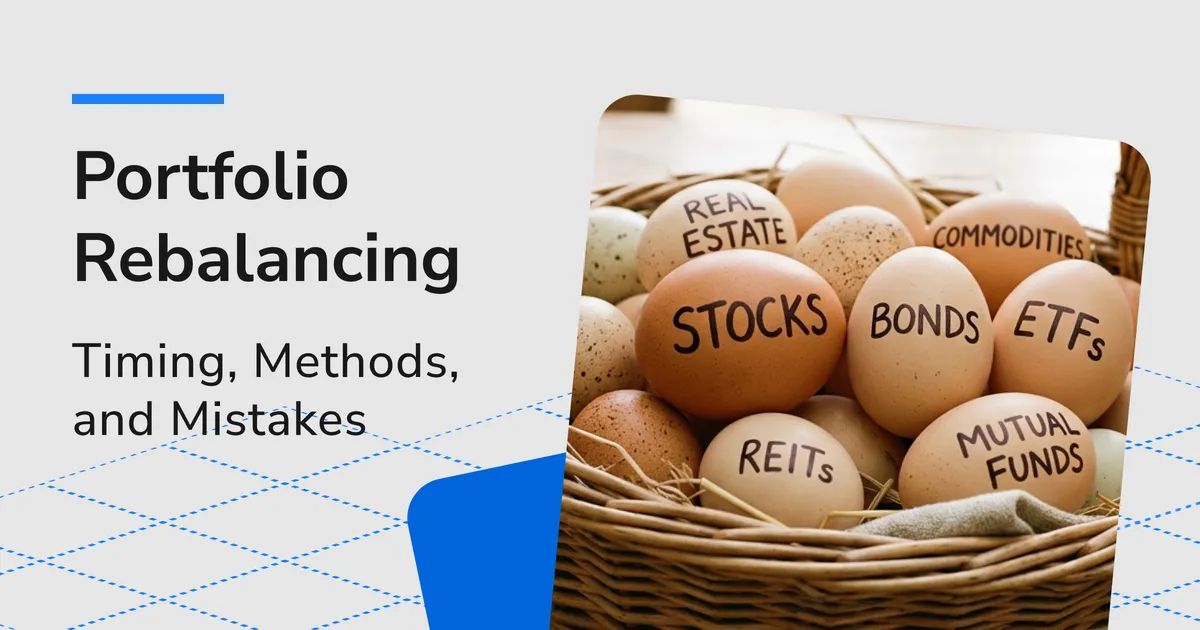
Portfolio rebalancing means bringing asset weights that drifted with market performance back toward a planned allocation or risk range. It is not a forecast of what will rise next. Its purpose is to keep one strong-performing asset from quietly changing the portfolio into something riskier than intended.
How does a portfolio drift?
Suppose NT$1 million starts at 60% stocks and 40% bonds. Stocks rise from NT$600,000 to NT$720,000 while bonds remain NT$400,000. The portfolio is now NT$1.12 million, with stocks at about 64.3% and bonds at 35.7%.
At a 60/40 target, the new target values would be NT$672,000 and NT$448,000. About NT$48,000 must move, either by selling stocks and buying bonds or by directing future contributions and income toward bonds.
Looking to diversify your portfolio?
You can start small to explore crypto assets—get started easily with just NT$10 a day!
Download ZONE Wallet NOW!Rebalancing versus changing the allocation
Rebalancing keeps the target and restores the mix. Reallocation creates a new target because goals, time horizon, income, or risk tolerance changed. If money planned for a home is needed much sooner, update the target before mechanically returning to the old mix.
Three ways to decide when to rebalance
Calendar review
Review every six or twelve months. It is simple, but a review does not require a trade when drift is small.
Drift threshold
Act only when an asset moves outside a preset range. This links action to risk, but a narrow range can create frequent trading.
Calendar plus threshold
Review on a fixed schedule and trade only when drift exceeds the chosen range. No frequency or threshold is universal; costs, portfolio size, and management habits matter.
Percentage points versus relative change
Write the threshold rule precisely. If the stock target is 60%, moving to 65% is a five-percentage-point increase, but it is an 8.3% increase relative to the original target. Either convention can be used, but they should not be mixed. A direct rule such as “review above 65% or below 55%” is easier to follow when markets are volatile.
Four ways to rebalance

- Sell overweight and buy underweight assets: fast, but potentially costly or taxable.
- Direct new contributions: useful during the accumulation stage and may avoid sales.
- Redirect dividends, interest, or maturities: use portfolio cash flows to fill underweight categories.
- Adjust in stages: reduce the pressure of one large trade, while accepting that drift lasts longer.
A practical six-step workflow
- Write down the target allocation.
- Define which accounts and holdings belong to the same goal.
- Calculate each asset category as a percentage of total market value.
- Compare current weights with the target and tolerance range.
- Use cash flows before deciding whether sales are needed.
- Record the date, reason, amounts, and next review.
Costs, taxes, and liquidity come first
Commissions, bid-ask spreads, taxes, currency conversion, and transfer costs can outweigh the value of small adjustments. Tax treatment also differs across account types and jurisdictions. Check the applicable rules before trading.
Keep near-term cash needs separate. Investing emergency funds merely to restore a neat percentage can increase total financial risk.
How does rebalancing reduce performance chasing?
It changes the question from “What is popular now?” to “Has my risk moved outside the plan?” Reducing an overweight winner or adding to an underweight category can be emotionally difficult, but a preset rule can reduce impulsive decisions.
Rebalancing may also sell an asset that keeps rising or add to one that keeps falling. It manages portfolio structure; it does not predict markets or guarantee returns.
When should the old target not be restored?
- The goal date changed.
- Income, debt, family obligations, or emergency savings changed materially.
- A product's costs, liquidity, credit quality, or regulatory conditions changed.
- The original mix was copied from someone else rather than linked to a goal.
Portfolio rebalancing FAQ
Does rebalancing guarantee better returns?
No. Its main purpose is to keep risk aligned with the plan.
Should I check every day?
Usually not. Constant monitoring can amplify short-term emotion and unnecessary trading.
Is rebalancing only for stocks and bonds?
No. Other asset categories can be included, although valuation, liquidity, and costs differ.
Can new contributions do the job?
Yes. Directing new money toward underweight assets is a valid method.
Should I rebalance immediately during a crash?
Follow a rule set in advance and first confirm that cash needs and risk capacity have not changed.
References
Investor.gov: Asset Allocation and Diversification
Investor.gov: Beginners' Guide to Asset Allocation, Diversification, and Rebalancing
What is ZONE Wallet?
ZONE Wallet is a Taiwan-based virtual asset exchange, allowing beginners to buy and sell easily with a single click. Combined with our dollar-cost averaging (DCA) feature, you can enjoy flexible, value-driven investment results!
ZONE Wallet also offers corporate account services with a fast and secure onboarding process. We help startups and enterprises leverage stablecoins to optimize cross-border payment workflows and reduce transaction costs. ZONE Wallet makes asset allocation more reliable for both personal financial management and corporate treasury strategies—helping you effortlessly navigate the future of Web3!
Start small to get comfortable with the process and risks.
Ready to dive into crypto?
[download-app]
Disclaimer: This article is for general information and education only and does not constitute investment, tax, or legal advice. Rules and personal circumstances can change; verify current information with the relevant authority, payer, or qualified professional.


