How Much Does a TRC20 USDT Transfer Cost? TRX, Energy and Exchange Withdrawal Fees Explained
Why can the cost of transferring USDT change even when you choose the same TRC20 network? Sometimes an exchange charges several USDT. Other times, your wallet asks you to prepare TRX first. Even with enough USDT, your transaction may not go through.
The answer depends on where you are sending from. Exchanges charge withdrawal fees under their own rules. A self-custody wallet uses on-chain Energy and Bandwidth, and may consume TRX if those resources are insufficient. Understand the two situations first, then check the estimate before sending so you know what you are paying for.
If you are new to buying and transferring USDT, start with how to buy USDT. This guide focuses on transfer costs and how to compare networks.
Ready to start investing in crypto?
Join ZONE Wallet and get started easily with just NT$3 a day!
Download ZONE Wallet now!First, are you withdrawing from an exchange or transferring from your own wallet?
Withdrawing from an exchange: the fee may also include a platform charge
When you transfer USDT from an exchange to an external address, select the network, enter the address and amount, and check the withdrawal fee and the amount the recipient is expected to receive. The platform may charge in USDT and set a fixed or variable fee depending on the network.
Transferring from your own wallet: the main cost is the network gas fee
If you hold your own recovery phrase or private key, transferring USDT on TRON involves Energy and Bandwidth. Your wallet estimates the cost based on the transaction and available resources, and uses TRX to pay when needed.
Some wallets may also offer fee sponsorship, resource services or other paid options. Check the fee and the currency used for each service.
Comparing fees across common networks
The ranges below are illustrative calculations based on stated conditions, intended to compare cost structures. Before sending, confirm the amount shown by your wallet or platform.
Assumed exchange rates for this table: US$1 = NT$32; TRX = US$0.30; ETH = US$2,350; SOL = US$150.
| Network | Transfer conditions used in this example | Illustrative fee range | Approximate TWD |
|---|---|---|---|
| TRON / TRC20 | USDT transfer from your own wallet, using approximately 64,000–130,000 Energy, paid entirely in TRX; assumes insufficient Bandwidth and an additional 0.35 TRX Bandwidth cost | Approximately US$2.03–4.01 | Approximately NT$65–128 |
| Ethereum / ERC20 | Token transfer from your own wallet, assuming 65,000 gas and a total gas price of 0.5–5 gwei | Approximately US$0.08–0.76 | Approximately NT$2.4–24.4 |
| Solana | A single-signature transfer to an existing recipient token account; assumes a total fee of 0.000005–0.00005 SOL | Approximately US$0.00075–0.0075 | Approximately NT$0.02–0.24 |
As you can see, whether TRC20 or ERC20 is cheaper depends on current conditions. When Ethereum gas prices are low, an ERC20 transfer may cost less than a TRC20 transfer without prepared resources.
Why might receiving a token on Solana for the first time cost more than the table shows?
Receiving a particular token on Solana requires a corresponding token account. If the transaction needs to create a new account, it must also fund the minimum balance needed for account storage.
For example, the official documentation gives 0.00203928 SOL for a 165-byte token account under the original Token Program. At the assumed SOL price above, that is approximately US$0.31 or NT$9.8, plus the transaction fee. The actual amount depends on the account type and network rules at the time. These funds are held in the account and, when the account is eligible and empty, can be sent to the destination specified in the closing transaction. The recipient of those funds is not necessarily the original funder, and this balance differs from a transaction fee consumed on each transfer.
What determines the cost of sending USDT from your own wallet? Energy and Bandwidth on TRON
Energy: processing the USDT contract
Sending USDT on TRON calls a token contract, whose execution requires Energy. Think of Energy as the computing capacity needed to complete the transaction.
Energy requirements can vary with contract state and network mechanisms. TRON's troubleshooting documentation gives an example in which the Energy required may differ depending on whether the recipient address already holds USDT. As a result, sending the same amount to different addresses may produce different fee estimates.
Bandwidth: processing transaction data
Bandwidth covers the size of the transaction data. The transaction contents, signatures and other factors affect how much Bandwidth is needed.
TRON offers different ways to obtain resources, including staking TRX and receiving delegated resources. The resources already available to your wallet affect how much additional TRX the transaction requires.
Paying with TRX when resources are insufficient
According to the official TRON resource documentation, the prices listed when checked were 0.0001 TRX per unit of Energy and 0.001 TRX per unit of Bandwidth. Use the current mainnet parameters and transaction estimate for the actual cost.
For example, suppose a transaction needs approximately 64,000 Energy, the sending address has no available Energy, and the sender pays for all Energy in TRX. The Energy cost alone would be:
64,000 × 0.0001 TRX = 6.4 TRX.
If the transaction also requires a Bandwidth fee, add that cost. Conversely, an address with enough available Energy and Bandwidth may consume less TRX directly for the transaction. Obtaining those resources can itself involve capital or service costs.
Note: exchange withdrawal fees may include additional platform charges
Platforms manage their own withdrawal processes and charge according to their published rules. The fee you see may use a different pricing method from the on-chain cost the platform ultimately pays, so it may differ from the estimates above.
Have USDT but cannot send it? Your wallet may need additional funds for gas
Your own wallet may need TRX, or a sufficient amount of the native token for another network, before it can complete the transfer. Check that the necessary balances are available before sending.
Platforms may also impose minimum withdrawals, available-balance requirements, account reviews or network suspensions. Funds frozen in your balance may not yet be available.
How can you lower USDT transfer costs?
Try again later when a network is congested
When a public blockchain is busy, gas fees may rise sharply for a short period. You can try again in 5–10 minutes and check whether the estimated transaction fee has fallen.
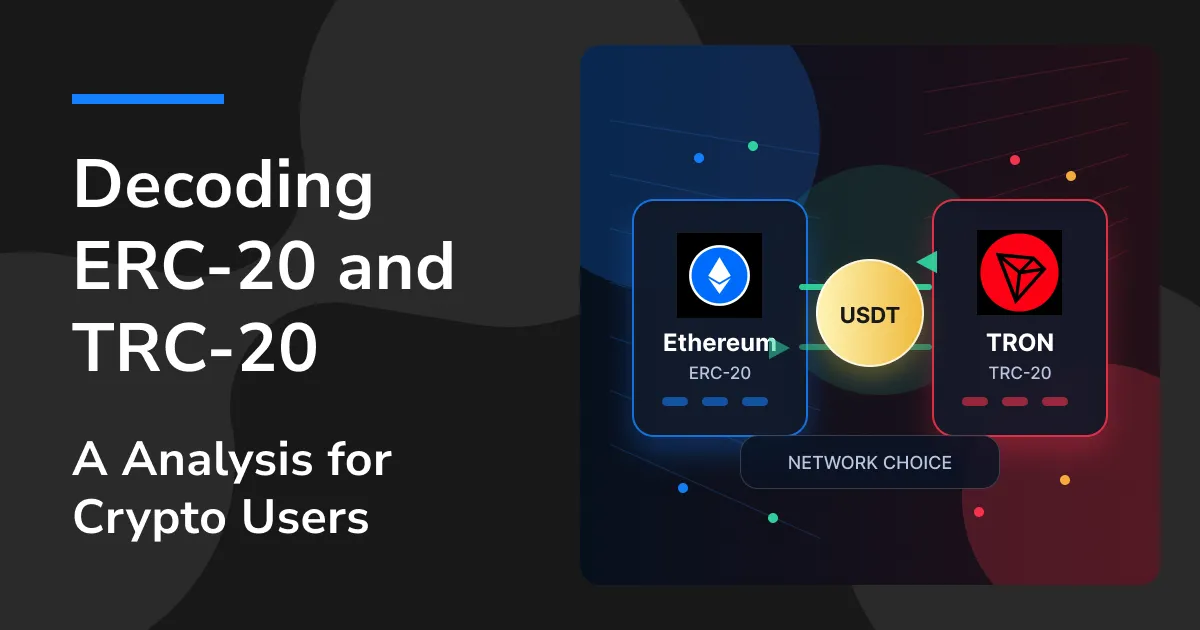
To understand the networks first, read ERC20 vs. TRC20. For Ethereum and Solana fee mechanisms, see Ethereum's official gas guide and the official Solana fee documentation.
TRC20, ERC20 or Solana: which should you choose?
The order can be simple: first confirm the recipient can receive it, then compare fees, and finally consider your familiarity with the process and how quickly the funds need to arrive.
If both you and the recipient support Solana, check the total cost for that transfer. If the recipient's payment page specifies ERC20, use the specified network. If your funds are already on TRON, compare the cost of sending directly with the total cost of moving them to another network before deciding.
For a large transfer, consider sending a small test amount that meets the recipient's minimum deposit requirement. Once the recipient confirms it arrived, send the remainder. The test itself incurs an additional fee, so include it in your budget.
TRC20 USDT transfer fee FAQ
Do I always need TRX to transfer USDT?
For an exchange withdrawal, prepare funds according to the platform's displayed charging rules. For a transfer from a self-custody wallet on TRON, check your available Energy, Bandwidth and fee arrangement; prepare TRX when needed. Wallet-sponsored transactions and similar services follow their own rules.
Is the fee proportional to the amount transferred?
On-chain costs mainly depend on transaction contents, resources and current rules. A platform may charge a fixed fee, a percentage or another type of fee. Check the quote before sending whether you are transferring 10 USDT or 1,000 USDT.
Is TRC20 always cheaper than ERC20?
Compare the two under current conditions. When Ethereum gas is low, an ERC20 transfer may be cheaper. A TRON address with available resources may also consume less additional TRX for that transaction. For exchange withdrawals, check the platform's fees.
Can a failed transaction still incur a fee?
If an on-chain transaction has already executed computation, it may consume resources or fees even if it ultimately fails. If a wallet or platform blocks it before it is submitted on-chain, the service's rules apply. Check the reason for failure before retrying to avoid repeated charges.
Who pays the fee when using USDT for a payment?
That depends on the agreement between the buyer and seller or the payment service's rules. Before paying, confirm the amount the recipient must receive and who pays any exchange withdrawal or network fees. Record the agreement in the order or contract.
What is ZONE Wallet?
ZONE Wallet is a Taiwan-based virtual asset exchange that lets beginners buy and sell easily in one tap. With recurring purchases, you can take a more flexible approach to value investing.
ZONE Wallet also offers services for business customers, helping startups and enterprises use stablecoins to improve cross-border payment processes and reduce transaction costs. Whether you are planning your personal finances or allocating corporate assets, ZONE Wallet helps you get started with Web3.
Start small and take time to understand the process and the risks.
Ready to explore crypto?
[download-app]
Risk notice: This article is for general educational purposes. Fees and rules can change. Before transferring, verify the asset, network, address and current estimate, and consider asset and operational risks.