What is Altcoin? Definition, Types, Risks & Investing Guide
The term “altcoin” appears frequently in the coin circle, but many people don't really understand what it really means.
Some people think that altcoins are “counterfeits,” “counterfeits,” and others think that altcoins are small coins that are cheap and prone to skyrocketing prices. But in fact,The definition of altcoins is much wider than you might think— Ethereum (ETH), the second largest cryptocurrency in the world, is also an altcoin!
This article will fully analyze the meaning, types, investment advantages and risks of altcoins, and tell you how to identify air coins, avoid scam traps, and help you safely participate in altcoin investing.
1. What does altcoin mean? Why is it called “Shantai”?
Formal definition of altcoins
Altcoin The word comes from English Coins Alternatives, meaning “alternative currency” — that isAll cryptocurrencies are called altcoins except Bitcoin。
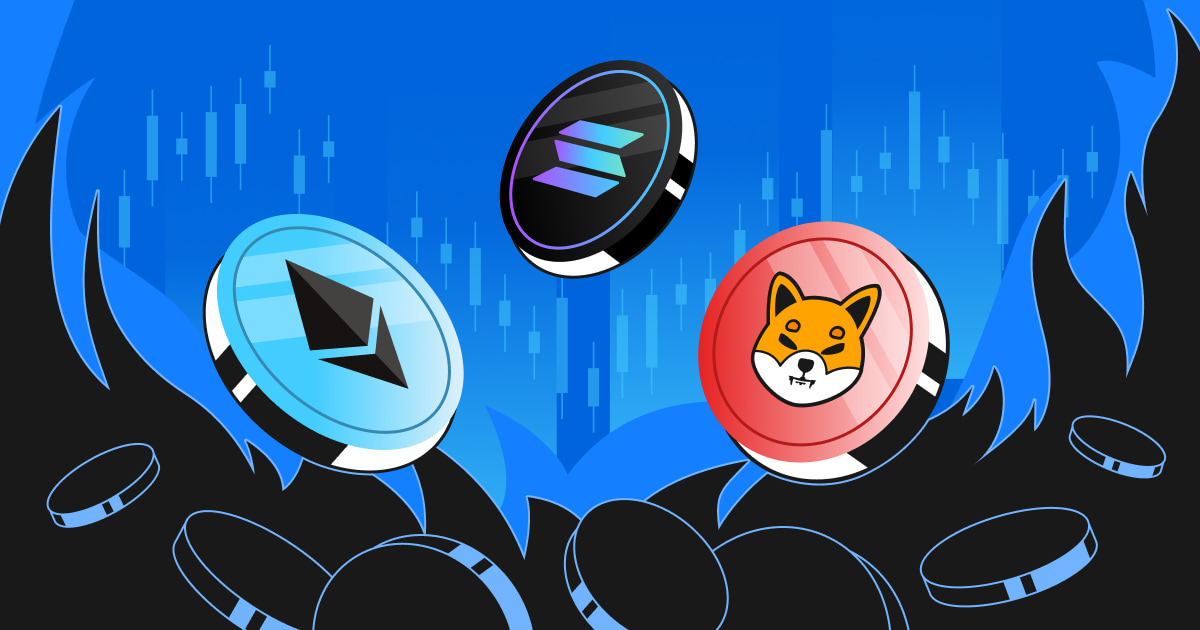
That's right, you didn't hear it wrong. Whether it's Ethereum (ETH), Binance Coin (BNB), Solana (SOL), or Dogecoin (DOGE), Shib Coin (SHIB),As long as it's not Bitcoin, it's even altcoins。
Why is it called “Shantai”?
The Chinese term “shantai” has the meaning of “imitation” and “unorthodox” and does not sound very positive. This is because early cryptocurrencies, indeed most areCode that mimics Bitcoin, just modify some parameters such as total supply, block time to release a copy.
Example:
- Litecoin (LTC) was born in 2011 and is called “The Light Edition of Bitcoin”
- It copies Bitcoin's code, but changes it to “Quit faster, total more”
- At the time, this practice was like “an altang factory replicating the original product”, so it was called altcoins
But as time evolves,More and more altcoins are no longer simply imitating BitcoinInstead, develop your own technical features, application scenarios, and ecosystems. For example:
- Ethereum (ETH): Introducing Smart Contracts, Establishing Decentralized Application Platforms
- Solana (SOL): Specializes in high-speed trading, processing 50,000 transactions per second
- Binance Coin (BNB): Binance exchange platform coins for transaction fee discounts
These currencies have long since got rid of the role of “imitators” and become cryptocurrencies with independent values.
💡 Focus on organizing: ALTCOINS = ALL CRYPTOCURRENCIES OTHER THAN BITCOIN. Although the name sounds like “counterfeit”, it actually contains many premium coins with innovative technologies and practical applications.
2. the types of altcoins: not all altcoins are the same
ALTCOINS CAN BE DIVIDED INTO THE FOLLOWING CATEGORIES ACCORDING TO THEIR FUNCTION, PURPOSE AND LEVEL OF RISK:
① Mainstream altcoins (major currencies)
Top 20 to 50 major currencies with a complete ecosystem, transparent development team and active community.
Representative currencies:
- Ethereum (ETH): Smart Contract Platform, DeFi, NFT Basics
- Binance Coin (BNB): Binance Exchange Platform Coin, BSC Chain Native Token
- Solana (SOL): High-speed blockchain, an alternative to competing with Ethereum
- Ripple (XRP): Cross-border payment solutions
Features:
- Relatively low risk and good liquidity
- There are actual application scenarios and technical support
- A Beginner Option for Beginners as an Altcoin
② Functional Token (DeFi/App Coin)
Currencies tied to specific decentralized finance (DeFi) or blockchain applications are typically used to govern voting, staking rewards, payment of fees, and more.
Representative currencies:
- GHOST: DECENTRALIZED LENDING PLATFORM TOKENS
- UNI: Uniswap Decentralized Exchange Token
- DYDX: DECENTRALIZED DERIVATIVES EXCHANGE TOKENS
Features:
- Value and Platform Utilization Binding
- There is a clear application scenario
- Medium risk, need to evaluate the competitiveness of the platform
③ Stablecoin
Cryptocurrencies that are price-anchored fiat currencies (usually the US dollar) are used to reduce the risk of market volatility.
Representative currencies:
- USDT (TEDA): The largest dollar stablecoin by market capitalization
- USDC: High compliance USD stablecoin
- DAI: Decentralized stablecoins
Features:
- Price stable, 1 USDT ≈ 1 USD
- Mainly used for trading mediums, hedges, cross-border payments
- Low risk, but pay attention to issuer's reserve transparency
④ Meme Coin
Coins that go red based on community culture, online rumors, and hype often have no real application value.
Representative currencies:
- Dogecoin (DOGE): MYANCOIN PROGENITOR, MUSCLINE STRONG
- SHIB COIN (SHIB): Self-proclaimed “Dogecoin Killer”
- PEPE: Raging Frog Mycoins 2023
Features:
- Prices are entirely driven by community sentiment and hype
- Extremely volatile, may rise or fall overnight
- High risk and high return, suitable for small speculation
⑤ Aircoin/Scam Coin
A currency with no technical prowess, no practical application, or even a white paper, is specifically used to scam money.
Common features:
- Team anonymity or data fabrication
- White Paper Hollow, Set Template
- There is no actual application scenario
- Price is controlled by bookmakers, making it easy to “pull up shipments”
Alerts:These types of coins are the biggest pitfalls in the coin circle, and beginners need to be careful! I'll teach you how to recognize it later.
3. Why invest in altcoins? Four advantages
Advantage 1: High reward potential
Bitcoin has risen to $95,000, and the threshold is high for smallholders. In contrast, the prices of many altcoins remain low,You can get 10x, 100x or even higher payouts if you bet on a treasure。
Real case:
- Solana (SOL) is around $1 in 2020, peaking at $260 in 2021, flipping 260 times
- Dogecoin (DOGE) jumped 140x from $0.005 to $0.7 in 2021
Of course, this bull run comes with high risks, but for investors willing to take risks, altcoins do provide “small-scale” opportunities.
Advantage 2: Participation in Emerging Ecosystems
MANY ALTCOINS ARE NOT JUST INVESTMENT FLAGS, BUT TICKETS TO THE EMERGING TECH AND FINANCIAL ECOSYSTEMS.
Example:
- Ethereum (ETH) holders can participate in DeFi lending, liquidity mining
- AAVE holders can vote on Aave platform governance
- Holders of game coins (such as AXS) can be used in on-chain games
This allows investors not only to “earn the spread”, but also to really participate in the development of blockchain applications.
Advantage 3: Market Diversity, Risk Dispersal
While Bitcoin is stable, the payoff is limited. The altcoin market offers thousands of options where investors can choose different types of currencies to configure according to their risk preferences and investment strategies.

Example of a strategy:
- 60% allocated major currencies (BTC, ETH)
- 30% Configuring Large Altcoins (SOL, BNB)
- 10% Configuring High Risk Minor Coins (Minesweens, New Items)
This provides both a solid foundation and the pursuit of higher growth space.
Advantage 4:24/7 24/7 trading
Unlike traditional stock markets, the cryptocurrency market is open 24 hours a day. You can buy and sell altcoins at any time, with no trading time limits, making your funds more flexible.
4. the risks of investing in altcoins: the three pitfalls that beginners should know
Risk 1: Extremely high volatility, may return to zero overnight
The altcoin has a small market value, liquidity gap, and the price is easily manipulated by Big Whale.A single day rise and fall of 20~ 50% is normal, and may even go to zero overnight。
Real case:
- Luna (LUNA) crashed from $80 to near $0 in May 2022, leaving countless investors heartless
- MANY SMALL ALTCOINS GO STRAIGHT TO ZERO AFTER BULL MARKET RAMPAGE 10X
How to reduce risk:
- Only invest the amount you can afford to lose
- Avoid redepositing a single currency
- Set stop point, fall and break immediately
Risk 2: Fraud, Airmoney Flooding
The coin circle is full of fake projects, fake teams, fake white papers. The sole purpose of these “air coins” is to scam money, and the development team rolls into the Runway (commonly known as Rug Pull) after retail buyers buy them.
Common Fraud Practices:
- Team Anonymous, Unable to Verify Background
- White paper plagiarism, content gaps
- Only on unknown small exchanges
- The community only talks about “going up”, not about technology and applications
How to Identify Fraudulent Coins:
- Enquire team background (LinkedIn, Twitter, past experience)
- Read the white paper to confirm that there is actual technical content
- Check currency information on CoinMarketCap or CoinGecko
- Choose currencies to be listed on major exchanges such as Binance, Coinbase
Risk 3: Lack of liquidity and difficulty performing
Many small altcoins trade very low and can't be bought in but not sold. When you want to sell, you may find:
- No bid, no hold orders can be sold
- The spreads are very large and the actual trading price is much lower than the closing single price
- A single order can cause the price to collapse
How to avoid:
- Prioritize high-volume, multi-exchange-traded currencies
- Avoid investing coins on “only one small exchange”
- Observe 24-hour trading volume with at least millions of dollars or more
5. How to invest in altcoins safely? SIX STEPS FOR BEGINNERS
Step 1: Do Good Research (DYOR)
DYOR (Do Your Own Research) is the iron law of the coin circle. Don't just listen to KOL, YouTuber recommendations, but check for yourself:
Research List:
- ✅ Is the team background transparent? Do you have a successful experience?
- ✅ Is the white paper detailed? Is there any actual technical content?
- ✅ Are there any real application scenarios for the currency?
- ✅ Is the distribution of tokens reasonable? Will the team share be too high?
- ✅ Is it listed on mainstream exchanges?
- ✅ Is the community active? How is the development progress?
Step 2: Choose a legitimate exchange
Don't trade on an unknown platform. Choose a large, legitimate exchange:
International Exchanges:
- Binance
- Coinbase
- Bybit
Taiwan Stock Exchange:
- HOYA BITS
- MAICoin
- ZONE Wallet
Step 3: Start small, control risk
When investing in altcoins for the first time, it is recommended to invest only 5~ 10% of the total assets and test the water temperature with a small amount.
Configuration Recommendations:
- New: 90% Mainstream (BTC, ETH) +10% Major Altcoins
- Advanced: 70% Mainstream+20% Large Altcoin+10% High Risk Mincoin
Step 4: Set up stop loss to protect principal
Set up a stop loss point before buying, such as “Drop by 20% on the market”. Strictly execute, do not hollow out the order.
Step 5: Diversify your investment, do not redeposit a single currency
Don't put all your money in one coin, spread it across 3 to 5 different types of altcoins to reduce the risk of a single currency crash.
Step 6: Continuous learning to keep abreast of market changes
Circles change very quickly, and today's popular coins may be eliminated tomorrow. Keep an eye on industry news, technical updates, and regulatory policies to make the right judgments.
6. ALTCOIN SEASONAL INDEX: A USEFUL TOOL FOR DETERMINING THE TIME OF ENTRY
Wondering if now is a good time to invest in altcoins? Can be referenced Altcoin Season Index。
What is the altcoin seasonal index?
This index calculates how many of the top 50 altcoins “beat Bitcoin” over the past 90 days to determine whether funds have flowed from Bitcoin to altcoins.
Index Interpretation:
- 75~100: Altcoin Season, Most Altcoins Perform Better Than Bitcoin
- 25~75: Period of turbulence, no clear trend
- 0~25: Bitcoin Season, Bitcoin is uniquely strong
Enquiry Website: https://www.blockchaincenter.net/en/altcoin-season-index/
When the index nears above 75, it means that market funds are pouring into altcoins, which may be a good time to lay out. But remember,This is a reference tool, not a prediction tool, still needs to be judged with other analyses.
7. Should beginners invest in altcoins? Small and Small Suggestions
For coin ring newbies who are completely inexperienced in investing, my advice is:
Phase 1: Start with Bitcoin and Ethereum
Don't chase small coins at first. Buy Bitcoin (BTC) or Ethereum (ETH) first, become familiar with market volatility and understand the logic of blockchain operation.
Stage 2: Try Large Altcoins
With some experience, you can allocate 10~ 20% of funds to the top 20 major altcoins such as SOL, BNB, ADA.
Phase 3: Try a small amount of high-risk coins
IF YOU REALLY WANT TO PLAY MINECOIN OR MINICOLIN, TAKE OUT 5~ 10% OF YOUR FUNDS AS A “TUITION FEE” AND EXPERIENCE THE THRILL OF HIGH VOLATILITY, BUT DEFINITELY DO NOT REBET.
Golden Rule: Invest in altcoins with only the money you lose.
summed
Altcoins are not “counterfeits”, but a synonym for all cryptocurrencies other than Bitcoin. From Ethereum, which is second in market value, to various feature coins, mini-coins, aircoins, the altcoin market is full of opportunities, but also full of pitfalls.
Before investing in altcoins, keep these points in mind:
- ✅ Do good research (DYOR), do not blindly follow
- ✅ Choose legitimate exchanges and avoid scam platforms
- ✅ Small start, spread the risk
- ✅ Set stop loss to protect principal
- ✅ Continuous learning to keep up with market changes
Altcoins can be part of your asset allocation, but they certainly shouldn't be all. By engaging in the right way, you can enjoy the growth potential of the altcoin market, provided you control the risk.
Disclaimer: This article is for educational and informational purposes only and does not constitute any investment advice. Investing in cryptocurrencies involves extremely high risk, and investors may lose all their capital. Please make a careful assessment based on your personal financial situation and consult a professional financial advisor if necessary.