A Complete Analysis of Digital Currency Pros and Cons: A Must-Read Comprehensive Assessment Guide for Taiwan Investors
preamble
Advantages and disadvantages of digital currenciesWhat is it? This question is crucial for Taiwanese investors who are considering entering the cryptocurrency market. With digital currencies playing an increasingly important role in the global financial system, more than one million people in Taiwan have accessed cryptocurrency investments. From the value storage capabilities of Bitcoin to the ease of payment in stablecoins, digital currencies are gradually changing the traditional financial ecosystem. However, risks such as high volatility and regulatory uncertainty also put many investors off guard. This article will comprehensively and objectively analyze the various advantages and disadvantages of digital currencies from the perspective of Taiwanese investors to help you make smarter investment decisions based on a full understanding of risks and opportunities.
Fundamentals of Digital Currency and Current Situation of Taiwan Market
Definition and classification of digital currencies
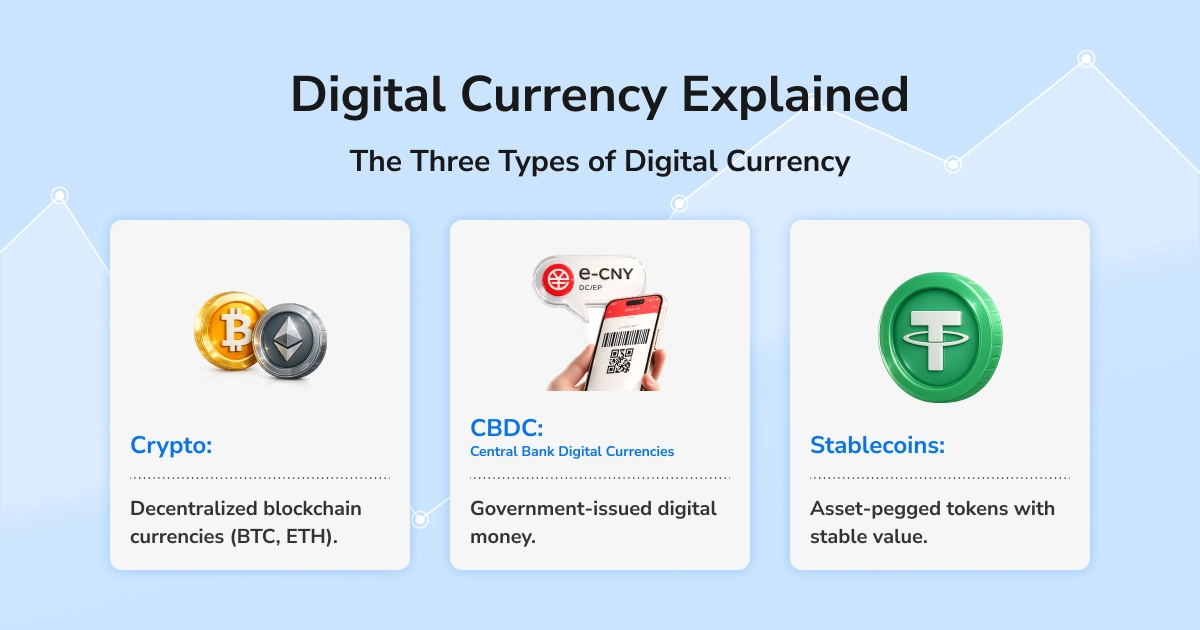
Digital currencyGenerally refers to currencies that exist in digital form, mainly divided into three main categories:
cryptocurrency: Decentralized operation using blockchain technology, such as Bitcoin, Ethereum.
Central Bank Digital Currency: Issued by the Central Bank, such as China's digital renminbi and Taiwan's still under study.
Stabilized currency: Price is relatively stable when linked to currencies or assets such as USDT, USDC.
Current Situation of Taiwan Digital Currency Market
According to the HKMA 2025 statistics, there are approximately 120 million people in Taiwan holding cryptocurrency assets. Major trading platforms include MAX, ACE, BitoPro, andZONE WalletExchanges that have completed Anti-Money Laundering Act compliance statements. The Bank of Taiwan is also actively studying the feasibility of a central bank digital currency (CBDC), showing the potential for the development of digital currencies in Taiwan.
Top 10 advantages of digital currencies in depth analysis
1. Decentralization and Anti-Censorship
Decentralized architecture: Most cryptocurrencies do not rely on central institutions for issuance or management, reducing the risk of a single point of failure. In Taiwan, this means that the digital currency network is likely to function properly even if the traditional financial system has problems.
Anti-censorship properties: It is difficult for governments or institutions to freeze or confiscate digital currency assets (unless they control the private key), providing a degree of financial autonomy. For Taiwanese investors, this can be one of the options for diversifying assets.
2. Increasing the efficiency of cross-border payments
Fast Cross-Border Transfer: Traditional international transfers take 3-5 business days and digital currencies can be completed in minutes. This greatly improves efficiency for cross-border remittances between Taiwan and Southeast Asian countries.
Reduce costs: Traditional cross-border transaction fees are as high as 5-10%, and digital currencies are usually less than 1%. Taiwan has a large number of Southeast Asian migrants, and digital currency can save them considerable remittance costs.
3. Enhancing Financial Inclusion
No bank account can participate: Billions of people around the world still do not have bank accounts, and digital currencies can only be used by mobile phones and the Internet. This lowers the threshold for financial services in rural areas or young people in Taiwan.
24/7 Intermittent Service: Traditional banks have limited opening hours, and digital currencies operate around the clock. Taiwan investors can trade at any time, without being affected by holidays.
4th. Transparency and Traceability
Public Transaction Record: All transactions on the blockchain are publicly viewable, increasing the transparency of the system. This has potential application value for supply chain finance or government procurement transparency for Taiwanese enterprises.
Prevent counterfeiting and double payments: The technical characteristics of cryptocurrencies make them difficult to counterfeit or reuse. IT HAS BORROWING IMPLICATIONS FOR TAIWAN'S ELECTRONIC INVOICING SYSTEM OR DIGITAL CERTIFICATES.
5. Inflating hedging potential
Limited supply design: IF BITCOIN TOTALS ONLY 2,100 MILLION, AVOID THE DEPRECIATION CAUSED BY UNLIMITED BUILD-UP. In the context of global expansion, Taiwanese investors can consider using it as one of the hedging instruments.
Value Storage Features: Some digital currencies are considered “digital gold”, attracting inflows, especially when the franc depreciates. Taiwan investors can allocate appropriate amounts to diversify their portfolio.
6. Promoting innovation and technological development
Smart Contract App: Platforms such as Ethereum support automated smart contracts that can be applied to insurance claims, supply chain management and other scenarios in Taiwan.
DeFi Ecology Development: Decentralized finance offers another alternative to traditional finance. Many developers in Taiwan are already involved in the development of DeFi projects.
7. Reduce transaction costs
Reduction of intermediaries: Decentralized characteristics reduce intermediaries and reduce transaction costs. There is a cost advantage for cross-border trade for SMEs in Taiwan.
Micropayment Feasibility: Very small payments are not economical in traditional financial systems, but digital currencies are feasible. There is potential for application of the small reward model for content creators in Taiwan.
8. Ownership & Control
Genuinely own assets: The private key holder has full control over the assets, unlike bank deposits (banks are only liable for debt). Taiwanese investors need to learn how to properly store their private keys.
Ease of heritage planning: Digital assets can be inherited via private key, but need to be properly planned. Taiwan investors should consider digital legacy arrangements.
9. Diversified Investment Opportunities
Emerging asset classes: LOW CORRELATION WITH TRADITIONAL EQUITY BONDS AND DIVERSIFIES PORTFOLIO RISK. Taiwan investors may consider a small percentage allocation.
High growth potential: Emerging tech fields can bring tremendous rewards, but come with high risks. Young investors in Taiwan may be more likely to tolerate such fluctuations.
10. Facilitate FinTech Development
Promote financial innovation in Taiwan: Digital currency-related technologies promote local fintech development and create employment opportunities.
Attracting international talent and funds: If Taiwan creates a friendly digital currency regulatory environment, it may attract investment in related industries.
Eight Disadvantages of Digital Currency Risk Assessment
1. Extreme Price Volatility
Sharp price fluctuations: The price of digital currencies may rise and fall sharply in a short period of time. For example, Bitcoin has fluctuated more than 20% in a day, and Taiwanese investors need a high level of risk tolerance.
Risk of Market Manipulation: The market size is relatively small and susceptible to large scale operations. Retail investors in Taiwan may be at an information disadvantage.
2. Security Risks and Hacking Threats
Exchange Risks: There have been many cases of exchanges being hacked worldwide, causing the loss of user assets. Investors in Taiwan should choose suchZONE WalletPlatforms that have completed the HKMA Compliance Statement.
Personal Retention Risks: The loss or theft of the private key will permanently lose the asset. Taiwanese investors need to learn how to secure their assets.
Smart Contract Vulnerability: DeFi protocol may have a software vulnerability that may result in loss of funds. Taiwanese investors should be fully aware of the risks before participating.
3. Regulatory uncertainty
Regulation in Taiwan continues to evolve: Although the HKUST has established a basic framework, the detailed specifications are still under discussion. Taiwan investors need to pay attention to regulatory changes.
International regulatory divergences: Different countries have different attitudes towards digital currencies, which may affect market development. Taiwanese investors should be aware of international regulatory developments.
Complexity of tax processing: Taiwan's cryptocurrency tax regulations are still being clarified, and investors need to keep complete transaction records.
4th. Technology thresholds and complexity of use
Steep learning curve: CONCEPTS SUCH AS WALLET MANAGEMENT, PRIVATE KEY STORAGE ARE COMPLEX FOR BEGINNERS. Older investors in Taiwan may face higher barriers to use.
Operational error risk: Error in the transfer address may result in permanent loss. Taiwan investors should carefully review transaction information.
Network and Device Dependency: A stable network and appropriate equipment may pose a barrier to Taiwan's rural or digitally disadvantaged communities.
5. Environmental Impact Disputes
Energy consumption problems: Bitcoin mining consumes a lot of electricity, sparking environmental controversy. Taiwanese investors may consider opting for more environmentally friendly digital currencies such as proof of interest.
E-waste: Eliminate electronic waste from mining equipment. Taiwan needs to think about relevant environmental management measures.
6. Risk of using illegal activities
Money Laundering and Terrorist Tools: Anonymous properties may be used for illegal activities. Taiwan regulations require exchanges to implement strict KYC/AML measures.
RANSOMWARE AND CRIME: Digital currencies become a means of payment for cybercrime. Businesses and individuals in Taiwan need to strengthen their data security.
7. Market Speculation Too High
Bubble risk: The market may experience irrational boom and subsequent crash. Taiwanese investors should avoid FOMO (fear of loss) sentiment.
Lack of intrinsic value base: Some critics believe digital currencies lack the value support of traditional assets. Taiwan investors need to evaluate their own value base.
8. Liquidity and Acceptance Limits
Limited Merchant Acceptance: Only a few merchants in Taiwan accept cryptocurrency payments directly. Convenience of daily use is still insufficient.
Liquidity risk: Minor market currencies may lack liquidity and may be difficult to buy and sell. Taiwanese investors should prioritize high-liquidity mainstream currencies.
Restrictions on French currency exchange: Some Taiwanese banks still have restrictions on cryptocurrency-related transactions, affecting the convenience of depositing funds.
Comparison of advantages and disadvantages of different types of digital currencies
Bitcoin (Bitcoin)
pros:
- Maximum market capitalization, optimal liquidity
- Highly recognized brand, considered “digital gold”
- Limited supply, resistance to expansion
shortcomings:
- Slower transaction speeds and higher processing fees
- Energy Consumption Controversy
- Extremely high price volatility
Ethereum
pros:
- SMART CONTRACT PLATFORM WITH WIDE APPLICATION SCENARIOS
- Rich Ecosystem, DeFi, NFT Basics
- CONTINUOUS IMPROVEMENT OF TECHNOLOGY UPGRADES
shortcomings:
- High technical complexity, high threshold of use
- Expensive handling in times of network congestion
- Facing competition from other smart contract platforms
Stable currencies (such as USDT, USDC)
pros:
- Relatively stable price, minimizes volatility risk
- Powerful trading medium
- EASY BRIDGING BETWEEN FRANC AND CRYPTOCURRENCIES
shortcomings:
- Reliance on Issuer Credit and Reserve Management
- Higher regulatory risk (may be treated as securities)
- High degree of centralization, in violation of the spirit of decentralization
Taiwan Central Bank Digital Currency (Research Phase)
Potential benefits:
- National credit backed, high security
- Integrate existing financial systems
- Improve payment efficiency and financial inclusion
Potential Challenges:
- Balancing Privacy and Regulatory Challenges
- High technology implementation costs
- Potential impact on traditional banking systems
The potential impact of digital currencies on Taiwan's economy
Potential for positive impact
Fintech Innovation: Promote the development of Taiwan's fintech industry and create high-value employment opportunities.
Cross-border trade efficiency: Improving the efficiency of cross-border transactions of SMEs in Taiwan, especially beneficial to the New South policy.
Diversified Investment Opportunities: Provides new asset allocation options for Taiwanese investors.
Potential Challenges and Risks
Financial Stability Risk: A large amount of capital flows into digital currencies may affect the stability of the traditional financial system.
Capital outflow concerns: Capital movements may increase and affect the stability of the NTD exchange rate.
Regulating Preferential Risk: Different international regulatory standards may create regulatory loopholes.
How should Taiwanese investors deal with digital currency risks?
Risk Management Strategy
Appropriate Layout Scale: Control your digital currency allocation within an acceptable range based on risk tolerance (usually recommended no more than 5-10% of the portfolio).
Diversified Investment Principles: Don't just invest in a single currency, consider different types of digital currency combinations.
Periodic Fixed Rate Strategy: Adopt regular fixed-rate investments to reduce the effects of market volatility and avoid large one-off investments.
Safety Practice Guide
Choosing a Compliance Platform: Priority use of Taiwan exchanges that have completed HKMA compliance declarations, such asZONE Wallet、MAX、ACE, etc.
Cold & Hot Wallet Separation: Large assets are stored using a hardware cold wallet, and the exchange retains only the funds needed to trade.
Continuous Learning Updates: The digital currency field is changing rapidly, and Taiwanese investors need to constantly learn new knowledge and security practices.
Regulatory Compliance Highlights
Full log saving: Keep all transaction records for tax returns, recommended for at least 7 years.
Keep an eye on regulatory dynamics: Regularly follow the latest policies and guidance on digital currencies from the HKMA and the Central Bank.
Legal Tax Filing: Declare cryptocurrency exchange income in accordance with the law to avoid tax risks.
Current Status and Future Trends of Digital Currency Regulation
Current situation of the regulatory framework in Taiwan
HKMA led supervision: Starting in 2021, the FIU will become the authority for virtual assets, and a basic anti-money laundering framework has been established.
Compliance Statement System: Requires virtual asset service providers to complete a compliance statement, which has now been completed by more than a dozen homeowners.
Investor Protection Measures: Strengthen the regulation of exchanges and require the establishment of investor protection mechanisms.
International Regulatory Trends
USA: Step by step to clarify the regulatory distinction between security-based and commodity-based digital currencies.
EU: Establish a unified regulatory framework through MiCA (Crypto Asset Market Regulation Act).
Singapore: Adopt a “balanced regulation” strategy to both encourage innovation and control risk.
Taiwan's Future Regulatory Direction
Step-by-step refinement of regulations: More detailed regulations are expected to be developed for exchange operations, advertising marketing, consumer protection, etc.
Strengthening international cooperation: WORK WITH OTHER JURISDICTIONS TO PREVENT CROSS-BORDER MONEY LAUNDERING AND MARKET MALPRACTICE.
Balance of innovation and regulation: Strive for the right balance between protecting investors and encouraging financial innovation.
Frequently Asked Questions and Myth Analysis
Q1: Is digital currency completely anonymous?
A: This is a common myth. Most cryptocurrencies are “pseudonymised” rather than completely anonymous. All transaction records are made public on the blockchain, and law enforcement can track the flow of funds through analytical techniques. Taiwan Stock ExchangeZONE WalletStrict KYC is required, transactions and identity links.
Q2: Will digital currencies replace traditional currencies?
A: Not very likely in the short term. Digital currencies are more likely to coexist with traditional currencies, each with different functions. The Bank of Taiwan's digital currency research is also a supplement rather than a substitute for cash.
Q3: Do you have to make money investing in digital currencies?
A: Absolutely not. Digital currencies are highly volatile and can incur serious losses. Investors in Taiwan should be considered as high-risk investments and invest only in funds that can bear losses.
Q4: Does the Taiwanese government ban digital currency?
A: NOT PROHIBITION, BUT REGULATION. The Taiwan Financial Conduct Authority has established a regulatory framework to require compliant operations by operators. It is legal for investors to trade through a compliant platform.
Q5: Does digital currency have intrinsic value?
A: This is a controversial topic in economics. Proponents consider its technical value, scarcity, and application potential to form the basis of value; opponents see a lack of physical support for traditional assets. Taiwan investors should consider their own judgment.
Summary: Development prospects and investment recommendations for digital currencies in Taiwan
Digital Currency Pros and Cons Balancing Perspective
Advantages and disadvantages of digital currenciesThe analysis shows that this is an emerging field full of opportunities but also with significant risks. For Taiwanese investors, the key is that:
Rationality views bipartisanship: Neither blindly chasing the “currency of the future” nor completely denying its innovative value.
Balance of risk and opportunity: Rigorously manage the risks involved while pursuing potential rewards.
Continuous Learning Adaptation: Technology and markets change rapidly, requiring continuous learning to update knowledge.
Practical advice for investors in Taiwan
Beginner's Advice:
- Start with learning, don't rush to invest
- Small test water temperature, familiar with market characteristics
- Choose a Taiwan compliant exchange, such asZONE WalletPlatforms with HKMA Compliance Statements
- Prioritize Mainstream Currencies to Avoid High-Market Risks
Advanced Investor Strategy:
- Creating a Systematic Risk Management Framework
- Diversify the configuration of different types of digital currencies
- Consider cold wallets to store large amounts of assets
- Focus on technological development and regulatory change
Risk Awareness Final Reminder:
- Only invest funds that can bear the full loss
- Avoid leveraged operations, especially in volatile markets
- Don't trust “Profit-for-profits” advertising
- Build a long-term investment mindset to avoid short-term speculation
Taiwan Digital Currency Development Outlook
Short Term (1-2 years): Step-by-step improvement of the regulatory framework, compliance exchanges such asZONE WalletEtc will provide a more secure trading environment.
Interim (3-5 years): Technology applications are more mature and there may be more blockchain innovation projects native to Taiwan.
Long term (more than 5 years): Digital currencies may become part of Taiwan's financial ecosystem and co-exist with traditional financial systems.
Advantages and disadvantages of digital currenciesDiscussions are not black and white choices, but rather complex issues that need to be assessed based on individual circumstances, risk tolerance and investment objectives. For Taiwanese investors, keep an open but cautious attitude, keep learning and doing good risk management to find the right way to participate in this fast-growing field. Whether or not you ultimately decide whether to invest in digital currencies, understanding its fundamentals and risk characteristics will help you make smarter decisions in an increasingly digital financial future.
Risk Warning Statement:
Investing in digital currencies is risky and prices fluctuate sharply, which can lead to loss of capital. This article is for educational purposes only and does not constitute any investment advice or profit guarantee. Before investing, be sure to research yourself, understand the risks involved, and invest only money that you can afford to lose. Any mentioned platform or service is provided for information only and does not constitute a recommendation or endorsement. “Virtual assets are non-currency, high-risk transactions and investors should use caution,” the HKMA reminds.