What Is a Gas Fee? Gwei, Network Fees and How to Calculate Them
When you prepare to send crypto from a wallet, the confirmation screen shows a network fee alongside the amount you are transferring. Open the same transaction a little later, and the fee may have changed.
A gas fee is the network fee paid to execute a transfer or smart contract on Ethereum and other blockchains that use gas-based pricing. Its size depends on how much computation the operation needs and the current price per unit of computation. Understanding these two numbers helps explain your wallet's estimate.
How do gas fees, miner fees and exchange fees differ?
“Miner fee” is a common name for a blockchain network fee, originating from networks where miners process transactions. Ethereum now uses proof of stake, with validators participating in block production. Gas fees are allocated according to the protocol: the base fee is burned, while the priority fee goes to the validator proposing the block.
Exchange fees depend on the services a platform provides.
| What you are doing | Common fee name | How it is determined |
|---|---|---|
| Sending from your own Ethereum wallet | Gas fee or network fee | Actual gas usage multiplied by the applicable unit price |
| Buying or selling crypto on an exchange | Trading fee | The platform's fee schedule and trading conditions |
| Withdrawing from an exchange to an on-chain address | Withdrawal fee | The quote for the platform, asset and withdrawal network |
For example, an exchange withdrawal screen may quote a USDT fee directly. When sending an ERC-20 token from your own Ethereum wallet, the sending address generally needs ETH to pay for gas.
For a closer look at these fee structures, see how TRC20 USDT transfer fees work.
Ready to start investing in crypto?
Join ZONE Wallet and get started easily with just NT$3 a day!
Download ZONE Wallet now →Three numbers to understand first
Think of gas as the amount of computation needed to complete an operation, and Gwei as the unit used to quote its price.
Gas Used: the computation actually consumed
Sending ETH, transferring tokens and swapping assets each involve different work.
A simple ETH transfer between ordinary addresses, with no additional data or contract execution, uses 21,000 gas. A token transfer calls a token contract, while more complex applications add further steps. Gas usage therefore varies by operation.
Start with the type of operation, then look at the wallet's estimate.
Gwei: the price per unit of gas
Gwei is a small denomination of ETH.
1 Gwei = 0.000000001 ETH, or one billionth of an ETH.
If a screen shows a gas price of 2 Gwei, each unit of gas costs 2 Gwei. If the transaction actually uses 21,000 gas, multiply that usage by the unit price.
Gas Limit: the maximum gas available to this operation
A wallet sets a Gas Limit to provide enough execution capacity for a transaction. After completion, its on-chain record shows the Gas Used.
You can read Gas Limit as “the maximum computation allowance prepared for this transaction,” and Gas Used as “the amount actually consumed.” To check the fee, look directly at Gas Used.
How to calculate a gas fee: a transfer example
For a typical EIP-1559 transaction on Ethereum mainnet, the actual unit price has two parts.
- Base Fee. Adjusted by the network according to block usage.
- Priority Fee. Paid to the validator proposing the block; the actual amount depends on transaction settings and current conditions.
The calculation is:
Actual gas fee = Gas Used × (Base Fee + actual Priority Fee)
Suppose a simple ETH transfer uses 21,000 gas, with a base fee of 1.8 Gwei and an actual priority fee of 0.2 Gwei.
| Calculation | Result |
|---|---|
| Actual price per unit of gas | 1.8 + 0.2 = 2 Gwei |
| Gas fee for the transaction | 21,000 × 2 = 42,000 Gwei |
| Converted to ETH | 42,000 ÷ 1,000,000,000 = 0.000042 ETH |
These hypothetical numbers illustrate the calculation. Use the wallet's current estimate when submitting a transaction.
If the actual unit price for the same type of transfer rises to 5 Gwei, the fee becomes 0.000105 ETH. With the same computation usage, a change in the network price changes the final cost.
How should you read the wallet's maximum fee?
Some wallets show both an estimated fee and a maximum fee. Advanced settings may also display Max Fee Per Gas, the highest price you are willing to pay per unit of gas.
Consider these hypothetical settings.
| Item | Assumed value |
|---|---|
| Gas Limit | 50,000 gas |
| Max Fee Per Gas | 4 Gwei |
| Gas fee budget based on both caps | 0.0002 ETH |
If execution ultimately uses 21,000 gas at an actual unit price of 2 Gwei, the settled fee is 0.000042 ETH, as calculated above. The usage and price caps provide budget headroom, while the final charge follows actual execution.
Why do gas fees change?
Two useful questions are “how many people are using the network at once?” and “how much work does this operation require?”
Popular activities, trading and applications can increase demand for block space and raise network prices. Different operations also consume different amounts of gas: sending ETH, transferring an ERC-20 token and swapping assets through a smart contract each execute their own computation steps.
When planning a transaction, check these three things in order.
- Confirm the operation. Identify whether it is a simple transfer, token approval or asset swap.
- Check the current estimate. Compare the wallet's estimated fee with your budget.
- Choose timing according to your needs. If your timing is flexible, check the estimate again later before deciding to submit.
For a current Ethereum fee reference, use the Etherscan Gas Tracker. Then return to your wallet and review the complete cost of the specific operation.
What should you confirm before a transfer?
For a self-custody Ethereum wallet, the confirmation screen typically lists:
- Network
- Recipient
- Transfer amount
- Estimated network fee
Reviewing them together before submission makes the total cost easier to understand than focusing on a single rate.
When sending ETH, your balance needs to cover both the amount and the network fee. When sending an ERC-20 token, check the token amount and the ETH balance used for fees separately. Some services offer fee sponsorship or other payment methods, with the quote shown during that operation.
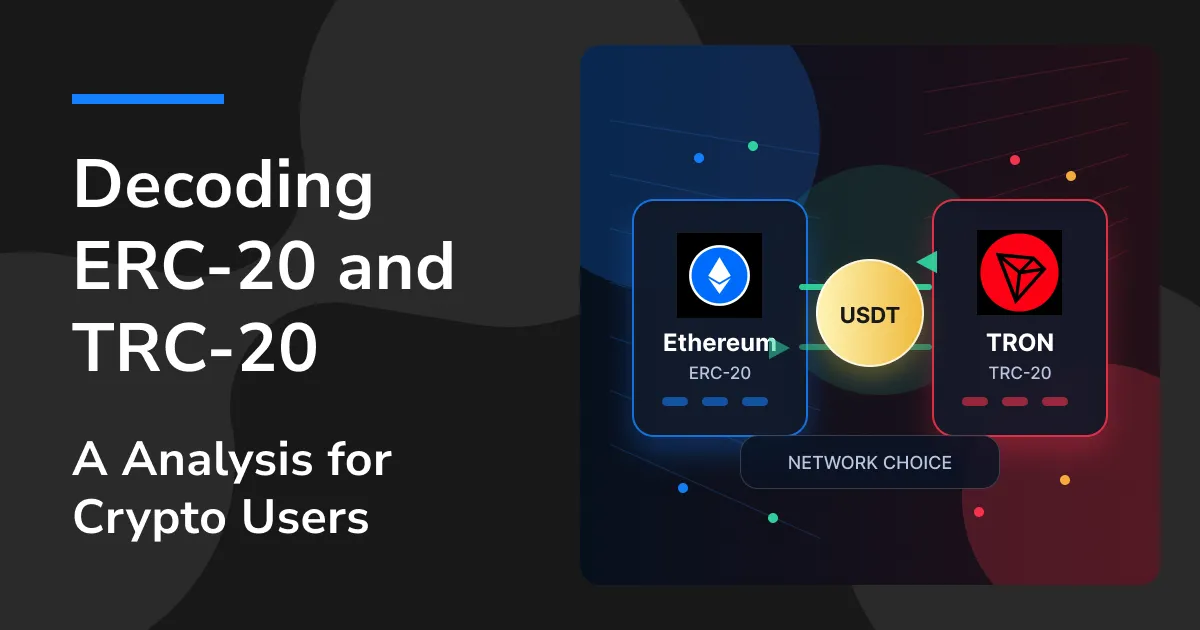
The network choice also affects receipt and fees. Before transferring, read ERC20 vs. TRC20 to understand how assets, networks and addresses relate.
After completion, open the on-chain transaction details and find Transaction Fee and Gas Used to verify the actual amount paid.
Gas fee FAQ
Do I pay gas to receive crypto?
For a standard on-chain transfer, the sender pays the network fee. If you later send those assets from your address, prepare the fees required by that network for the new operation.
Why is there still a gas fee when a transaction fails?
A transaction executed on-chain may encounter an unmet condition or insufficient gas during computation. The network charges for resources already consumed. Read the error message in the transaction details before adjusting the next operation.
How does sending a larger amount on the same network affect gas?
Gas mainly depends on the computation required and the current unit price. For the same type of simple ETH transfer, the basic gas usage usually stays the same as the amount increases. The total outlay also includes the ETH being sent.
How can I judge whether a wallet's estimate is reasonable?
Use the current Gas Tracker rate as a reference, then compare the operation type and the wallet's estimated gas usage. Complex contracts may involve multiple steps; check the full cost against the wallet preview and the completed on-chain record.
What is ZONE Wallet?
ZONE Wallet is a Taiwan-based virtual asset exchange that helps beginners buy and sell with a tap. Its recurring investment feature offers a more flexible way to pursue value investing.
ZONE Wallet also provides virtual asset services for corporate clients, helping startups and businesses use stablecoins to improve cross-border payment processes and reduce payment costs. From personal finance to corporate asset allocation, ZONE Wallet helps you explore the future of Web3.
Start small and get familiar with the process and risks.
Ready to try crypto?
[download-app]
Crypto asset prices and on-chain transaction fees may fluctuate; confirm the transaction details, network and fees before proceeding.