A Guide to Interest Rate Hikes: The Real-World Impact of Central Bank Policy
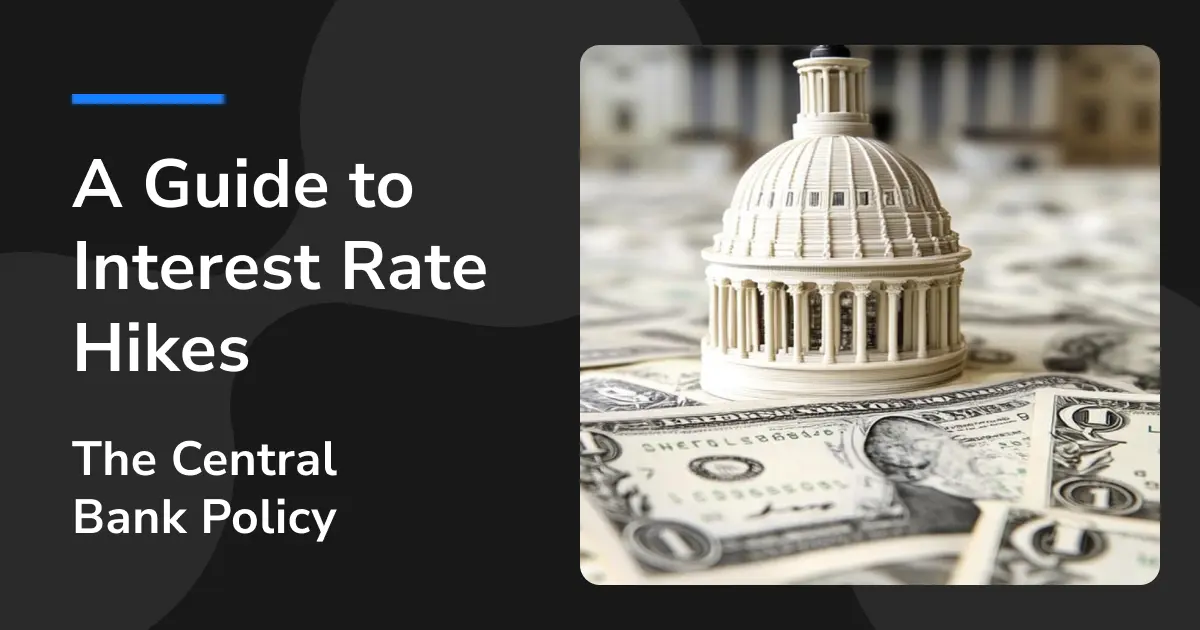
“Interest rate rise” is a financial keyword that often appears in the news, but do you really understand the impact it has on your life? Why should the Federal Reserve raise interest rates? What are the disadvantages of rising interest rates for borrowers, depositors, and investors? Starting with the basic concepts, this article will go deeper into how an uplift works, the pros and cons, and looks at how different families can respond. Whether you are a small owner of a mortgage or an investor planning an asset allocation, you can get a full picture of rising interest rates with this article.
Important Reminder:
Stress-free investing for beginners!
Effortlessly build your assets with crypto starting at just NT$10 a day.
Download ZONE Wallet NOW!- Interest rate policy continues to change with the economic environment. Historical data in the article are for reference only
- For the latest interest rate information, please check the official website of the Central Bank of Taiwan
- This article does not constitute investment advice, and any decisions should be carefully evaluated for personal risk tolerance
Extended Reading Resources:
- Bank of Taiwan Interest Rate Decision Description: Central Bank Official Website
- Mortgage calculation tools for banks: Official websites of banks of Taiwan and major commercial banks
- Historical Timeline of Rises and Declines: Central Bank Statistics Database
First, what is a rise in interest rates? White Speech Full Explanation
Interest Rate Hike, refers to the central bank's monetary policy means of raising the “benchmark interest rate”. Simply put, the central bank raises the interest rate on the money it provides to commercial banks, thereby affecting the cost of borrowing across the financial system.
SIMPLE ANALOGY: LIKE A RESERVOIR ADJUSTING THE WATER LEVEL
Imagine the central bank as the manager of a large reservoir:
- Decrease in interest: Open the gates to allow more funds to flow to the market (such as irrigation of agricultural fields), stimulating economic activity
- Rising interest rates: Close the door, reduce the flow of funds in the market and cool down the overheating economy
When central banks raise rates, the cost of borrowing money from central banks increases, and lending rates for businesses and individuals naturally increase. It makes sense that just as wholesale prices rise, retail prices follow the rise.
Three key interest rate hikes by the central bank
The Central Bank of Taiwan will simultaneously raise the following three policy rates when raising interest rates:
| Interest Rate Type | Description | September 2023 Level | Current Rate |
|---|---|---|---|
| Rediscount Rate | Rate applied when banks finance discounted bills through the central bank | 2.000% | Check central bank website |
| Secured Loans Accommodation Rate | Rate when banks borrow from the central bank using eligible bills as collateral | 2.375% | Check central bank website |
| Short-Term Accommodation Rate | Rate for emergency borrowing from the central bank without collateral | 4.250% | Check central bank website |
Data Source: Resolution of the Central Bank Supervisory Meeting in September 2023
For the latest interest rates, please visit the official website of the Central Bank: https://www.cbc.gov.tw/
In addition, the central bank will simultaneously increase the “Taiwan Dollar Deposit Readiness Rate”, requiring banks to reserve more non-lending funds, further shrinking market capital.
Second, why should the interest rate rise? The main purpose of the central bank's interest rate rise
🔑 Objective 1: Suppress inflation (the main reason)
This is the main and most common reason for the rise in interest rates. When prices rise too high and there is too much capital in the market (known as “hot money”), which can trigger malignant inflation, the central bank will cool the economy by raising interest rates.
Operational logic:
Rising interest rates
↓
Higher Borrowing Costs → Decreased Investment Willingness
↓
Increasing deposit rates → People are more willing to put their money in the bank
↓
Reduction of circulating capital in the market → Decreased desire to consume
↓
Pressure on rising prices eases
Actual case:
- Taiwan CPI growth rate once exceeded 3% in 2022 (exceeding the central bank tolerance range)
- Central Bank Raises 5 Consecutive Interest Rates Since March 2022, Cumulative Rate Increase of 2.5pc
- Inflation gradually falls below 2% in 2023
🔑 Objective 2: Prevent asset bubbles
When the stock market and housing market are overheating and prices are off the fundamentals, rising interest rates can increase financing costs, suppress speculation hype and avoid market bubbles.
History Lessons:
- Long Term Low Interest Rates in the US Before the 2008 Financial Tsunami Caused a Housing Bubble
- Bubble Burst Triggers Global Financial Crisis
- Moderate rate increases are seen as an important tool for preventing systemic risk
🔑 Goal 3: Stabilize exchange rates
If Taiwan does not follow up when other major economies, especially the United States, increase the pressure on the outflow of funds and the depreciation of the Taiwan dollar. A moderate rise in interest rates helps keep the exchange rate stable.
Actual impact:
- Extreme Rate Increase in 2022-2023
- Taiwan's central bank follows interest rate hike, partly due to maintaining stable NTD exchange rate
- Avoid further increases in import prices due to the depreciation of the exchange rate
Third, the “benefits” of rising interest rates: who can benefit from it?
✅ Benefit 1: Inhibit inflation, protect purchasing power
The most fundamental benefit of rising rates is to control price rises. By reducing market overflows, reducing speculative inflation, keeping commodity prices stable and protecting people's purchasing power.
According to an analysis by Hu Yi-shan, chief consultant at the Malaysian Pacific Research Centre, the rate rise is aimed at “speculative expansion” — when borrowing costs rise, the space and willingness of traders who want to raise prices to “harvest leeks” shrinks accordingly.
Actual effect:
- May feel unnoticeable in the short term
- Medium-long term contributes to price stability
- Avoiding malicious expansions (such as Taiwan in the 1980s, Turkey in the 2020s)
✅ Benefit 2: Increased interest income from fixed income
This is the most direct positive impact of rising rates. When the central bank raises interest rates, banks also raise deposit rates so depositors can earn higher interest income.
Specific Calculations:
| Principal | Original Rate 2% | Rate After Hike 2.5% | Interest Difference (1 Year) |
|---|---|---|---|
| NT$100,000 | NT$2,000 | NT$2,500 | +NT$500 |
| NT$500,000 | NT$10,000 | NT$12,500 | +NT$2,500 |
| NT$1,000,000 | NT$20,000 | NT$25,000 | +NT$5,000 |
A rise in interest rates is undoubtedly good news for people with a low risk appetite and a habit of keeping their money in the bank.
⚠️ But note:Even if interest rates rise, if deposit rates remain below the inflation rate (e.g. 2.5% interest rate but 3% inflation), real purchasing power will shrink. This situation is known as “negative interest rates”.
✅ Benefit 3: Benefit from specific industries such as financial stocks
In the context of rising interest rates, banks have widened spreads on deposits (higher lending rates, but lower deposit rate increases) and profitability increases, and financial stocks generally benefit.
Beneficiary Industries:
- Banking: Widening spread on deposits
- Life Insurance: Investment income may increase (but also look at the impact of the bond sector)
- Value stocks: Relative growth stocks are more resistant to falling
Example of Taiwan 2022-2023:Financial stocks rose broadly at the start of the rate hike, but eased gains as interest rates came to an end and economic concerns grew.
✅ Benefit 4: Contributes to long-term economic health
A moderate rise in interest rates can avoid overheating, asset foaming, and steer the economy into a “soft landing” — while controlling inflation, not triggering a severe recession.
According to UBS, companies can still achieve profit growth in the context of a soft economic base, and market performance will tend to be stable.
Ideal condition (soft landing):
- The inflation rate gradually returns to the target range (Taiwan approx. 2%)
- ECONOMIC GROWTH SLOWS BUT MAINTAINS POSITIVE GROWTH
- Unemployment rate remains low
- Avoiding a Hard Landing (Economic Recession)
✅ Benefit 5: Strengthening currency value, favorable import
A rise in interest rates usually leads to a rise in the domestic currency. Benefits of currency appreciation:
For consumers:
- Cheaper to travel abroad
- It is cheaper to buy imported goods (iPhone, imported cars, etc.)
- Reduce the cost of studying abroad and spending abroad
For Business:
- Reduced cost of imported raw materials
- Helps control production costs
- Reduce import expansion pressure
⚠️ But there are also disadvantages:
- Export products become more expensive in international markets and competitiveness decreases
- Export-oriented enterprises (such as Taiwan technology industry) may be affected
Fourth, the “bad” of rising interest rates: Who will be hit?
❌ Bad point 1: Mortgage burden is heavy (most sensitive)
This is the most direct and painful impact of rising interest rates on the general population. Whether it is a mortgage, car loan, credit, as long as it is a loan calculated at a floating rate, the amount of repayment increases every month.
📊 Mortgage family impact calculation (return on average of the interest)
Assumption condition:
- Loan Amount: 1 million USD
- Loan term: 30 years
- Interest rate: 2.0%
- Interest rate after interest rate increase: 2.5% (2 pips)
IMPACT ANALYSIS:
| Item | Original Rate 2.0% | After Hike 2.5% | Difference |
|---|---|---|---|
| Monthly Payment | NT$36,962 | NT$38,885 | +NT$1,923 |
| Annual Increase | - | - | +NT$23,076 |
| 30-Year Total Interest | ~NT$3.306 million | ~NT$3.999 million | +NT$693,000 |
⚠️ Important Reminder:
- The impact will be more significant if the central bank continues to raise interest rates (such as a 5 point increase to 2.25% → 3.5%)
- Actual impact depends on loan conditions (maturity, repayment method, interest rate, bank surcharge extent)
- Landlords may increase rents due to increased loan costs. Tenants may also be indirectly affected
💡 Online calculation tool:
- Bank of Taiwan Mortgage Calculation
- Real Estate Information Platform of the Ministry of Internal Affairs
❌ Bad point 2: Stock market crash
Rising interest rates often have a negative impact on the stock market, including:
- Increase in corporate financing costs → Earnings Expectations Decrease
- Funds flow from the stock market to deposits or bonds → Decrease in capital in the stock market
- Valuation compression → Especially growth stocks with a higher Yield
The Business Times columnist noted:
“When the central bank announces a rise in interest rates, the share prices of many companies in excellent shape may still evaporate by two percent overnight — it is not a corporate mistake, but a withdrawal of capital.”
Historical case:
- Nasdaq drops 33% year-on-year, Nasdaq surges interest rates in 2022
- Taiwanese stocks also fell from 18,000 points to 13,000 in 2022 (down 28%)
- Technology growth stocks with higher capital ratio fall deeper (some stocks fall by more than 50%)
⚠️ But not absolutely:Sometimes the stock market “reacts early” to expectations of a rate hike, and when the central bank actually raises rates, it rises (Buy the rumor, sell the news). Investing requires a comprehensive judgment.
❌ BAD POINT 3: BOND PRICES FALL
Bond prices and interest ratesSlope Board Relationships— Interest rates rise and bond prices fall.
Why?
- Higher interest rates on newly issued bonds (e.g. 3%)
- Lower interest rates on old bonds (e.g. 2%)
- Everyone in the market wants to buy new bonds, and the price of old bonds has to fall before anyone can buy
Impact:
- Investors holding bonds face accounting losses
- Long-term bonds (such as 10-year and 20-year terms) are more affected
- Capital plus interest can be recovered if the holder expires, but there will be a loss on sale ahead of time
Actual case:The US 20-Year Bond ETF (TLT) fell by more than 30% during the US rate rise in 2022, the largest decline in history.
❌ Bad 4: Business expansion is hindered, affecting employment
Higher borrowing costs suppress companies' willingness to invest, which can lead to:
- Reduce capital expenditure (e.g. plant and equipment investments)
- Delay expansion plan
- Cutters or Freeze Personnel
Overall Economic Impact:According to an analysis by the International Monetary Fund (IMF), after three years of rising US interest rates:
- GDP in developed economies will shrink by around 0.5% on average
- GDP in emerging economies may fall by 0.8%
- Unemployment rate may rise
When the economy slows, everyone's job opportunities and salary growth end up affecting them.
❌ Downside 5: Emerging market capital outflows
For emerging market countries, rising US rates tend to present more severe challenges:
Triple Strike:
- Outflow of funds → Investors withdraw funds to the United States to enjoy higher risk-free interest rates
- DEPRECIATION OF THE NATIONAL CURRENCY → Outflow of capital leads to devaluation of the exchange rate, and import prices rise
- U.S. Dollar Debt Burden → Many emerging countries have dollar-denominated debt, rising interests+rising US dollar increases debt repayment pressure twice
Vulnerable country characteristics:
- Long-term trade deficit
- Reliance on US Dollar Debt
- Insufficient foreign exchange deposit
- For example: Turkey, Argentina, Sri Lanka
Taiwan is relatively stable:Due to its large trade spread and ample foreign exchange reserves (No. 4 in the world), Taiwan suffered relatively little negative impact from the rise in the United States.
❌ Bad 6: Decreased desire to consume, economic slowdown
When borrowing costs increase:
- Reducing the consumption of debit cards by the general public
- Deferred Car Purchase Scheme
- Reduced investment by enterprises
A drop in overall demand could trigger an “economic contraction cycle”:
Increases→Decrease in consumption→Decrease in businesses→Workers/Payrolls→Less consumption→Economic recession
This is the “hard landing” scenario that the central bank least wants to see.
5. A list of the impact of rising interest rates|Who benefits? Who is the victim?
| Group/Aspect | Impact of Rate Hike | Advantage/Disadvantage | Impact Level |
|---|---|---|---|
| Mortgage Holders | Monthly payments increase, financial burden grows | ❌ Disadvantage | ⭐⭐⭐⭐⭐ Very High |
| Renters | Landlords may pass on costs by raising rent | ❌ Disadvantage | ⭐⭐⭐ Medium |
| Fixed Deposit Holders | Interest income increases | ✅ Advantage | ⭐⭐⭐ Medium |
| Stock Investors | Stock prices fall, capital outflows | ❌ Disadvantage | ⭐⭐⭐⭐ High |
| Bond Investors | Bond prices decline | ❌ Disadvantage | ⭐⭐⭐⭐ High |
| Financial Stock Investors | Interest margins widen, profits increase | ✅ Advantage | ⭐⭐⭐ Medium |
| Export Companies | Currency appreciation reduces export competitiveness | ❌ Disadvantage | ⭐⭐⭐ Medium |
| Import Companies | Import costs decrease | ✅ Advantage | ⭐⭐ Low |
| General Consumers | Inflation curbed (good), but spending power may decrease (bad) | Mixed | ⭐⭐⭐ Medium |
| Borrowers | Overall borrowing costs increase | ❌ Disadvantage | ⭐⭐⭐⭐ High |
| Overseas Travelers | TWD appreciates, overseas spending becomes cheaper | ✅ Advantage | ⭐⭐ Low |
| Unemployment Risk Group | Economic slowdown may affect employment | ❌ Disadvantage | ⭐⭐ Low to Medium |
VI. The cyclical cycle of rising and falling interest|Understand the four seasons of the economy
Understanding Rises is not just looking at a single point in time, but understanding the whole “upswing cycle.”
Economic Cycles and Interest Rate Policy
| Phase | Rate Hike Cycle (Tightening Policy) | Rate Cut Cycle (Easing Policy) |
|---|---|---|
| Economic Condition | High inflation, overheating economy | Economic recession, deflation risk |
| Central Bank Action | Raise rates | Lower rates |
| Borrowing Cost | Increases | Decreases |
| Consumption & Investment | Decreases | Increases |
| Economic Impact | Economy cools down | Economy recovers |
| Next Phase | Inflation controlled → Rate hike pause or begin rate cuts | Economy overheats → Rate cut pause or begin rate hikes |
Taiwan's Recent Rising Interest Rate History
Interest Rate Reduction Period (2020):
- MARCH 2020: CENTRAL BANK CUTS INTEREST RATE BY 1PC TO 1.125% DUE TO COVID-19
- Purpose: Stimulate the economy and avoid recession
Rate rise period (2022-2023):
- March 2022: Increase of interest by 1 pc (first increase in 10 years)
- June 2022: Interest rate rise by half a cent
- September 2022: Interest rate rise by half a cent
- December 2022: Interest rate rise by half a cent
- March 2023: Increase in interest rates by half a cent
- Cumulative yield up 2.5 percentage points, reload rate rises from 1.125% to 2.000%
Current status (after 2023):
- Interest rates remain high
- For the latest news, please check the official website of the Central Bank
How to determine which stage you are currently in?
Observation indicators:
- Inflation Rate → CPI Annual Growth Rate (Main Accounting Office Website)
- Economic Growth Rate → GDP Growth Rate
- Central Government Policy Statement → Minutes of Supervisory Meeting
- International Interest Rate Environment → American Federation Policy
Understanding this cycle helps determine what stage you are currently in and adjust your financial strategy accordingly.
7. FAQ Q&A
Q1: Will rising interest rates necessarily cause the stock market to fall?
A: Not necessarily.
The impact of rising interest rates on the stock market depends on several factors:
- Amplitude and Velocity: Small impact of moderate rate rise, greater impact of aggressive rate rise
- Fundamentals of the Economy: If business profits continue to grow, it is possible to offset the negative impact of rising profits
- Market Expectations: If the market has reacted ahead of time, it may not fall or rise when rates actually rise
Historical case:
- Stock markets continue to rise during the rise of US interest rates in 2004-2006
- Taiwan Stocks Fall Early in 2022, but Rebound in 2023
Q2: Do the depositors definitely benefit?
A: Benefit nominally, but consider the actual remuneration.
The key isReal interest rate = nominal interest rate - inflation rate
Scenario 1: Benefit
- Fixed deposit rate: 3%
- Throughput: 2%
- Real interest rate: +1% (increased purchasing power)
Scenario 2: Still losing
- Fixed deposit rate: 2.5%
- Throughput: 3%
- REAL INTEREST RATE: -0.5% (PURCHASING POWER IS STILL SHRINKING)
Therefore, even if interest rates rise, investors still need to focus on inflation.
Q3: What assets should I buy when interest rates rise?
A: Depends on the stage of the rise.
Initial period of interest rate rise:
- Value stocks, financial stocks
- Bulk commodities (energy, raw materials)
- Short-Term Bonds
Interim Rate Increase:
- Cash, Short-Term Bonds
- Defensive stocks (consumer, utilities)
Rise Ending Sound:
- Long-Term Bonds
- Growth Stocks (Low Placement)
⚠️ Reminder:As a general principle, actual investments should take into account personal risk tolerance and financial goals.
Q4: Should the mortgage lender pay in advance or invest?
A: Compare the rate of return decisions.
Decision Principle:
If: Mortgage Interest Rate > Expected Return on Investment
→ Priority Mortgage Repayment

If: Mortgage Interest Rate < Expected Return on Investment
→ Consider investing (but bear the risk of investing)
For example:
- Mortgage interest rate: 2.5%
- Fixed deposit rate: 2.0% → Preferred mortgage
- Expected return on stocks: 6-8% → Considerable investment (but with risk)
Suggested:
- Reserve Emergency Reserve (6 Months Living Fee)
- Don't sacrifice financial security for the sake of your investment
- Prioritize mortgage repayments for those with low risk tolerance
Q5: How long will the rate rise last?
A: Depends on inflation and economic conditions.
Historical reference:
- US 2004-2006:2 years of rising interest rates
- US 2015-2018:3 years of rising interest rates
- United States 2022-2023:1.5 years of rising interest
Observation indicators:
- Does the throughput fall back to the target range
- Is economic growth slowing?
- Is the job market cooling
- Changes in wording of central government policy statement
Situation in Taiwan:Until 2023, the central bank has stopped raising rates and kept interest rates high. Future trends need to be watched continuously.
Conclusion: Understand the rise, only to respond from tolerance
Rising rates are like the central bank's “thermostat” — when the economy is overheating, raising the temperature cools the market; when the economy is cold, lowering the temperature injects the flow of heat. It's a double-edged sword that benefits people, some people get hurt, but it's necessary for the long-term health of the economy as a whole.
As the Business Times columnist put it:
“Don't stare at stock price surges, watch the flow of funds. The rule of investment survival between a rise and a fall is not about predicting each fluctuation, but in creating a thinking framework that can accommodate the change.”
Understanding the pros and cons of rising rates is not to panic or over-optimism, but to find your own steady rhythm in a changing market.
Last Reminder
- Continued focus on central action → Central Bank Official Website
- Regularly review asset allocation → Adjust according to the stage of the rise
- Controlling Lending Leverage → High risk of over-indebtedness in an environment of rising interest rates
- Enhance professional skills → Labor income is the best anti-inflation asset
- Maintain rationality → Avoiding Emotional Decisions
What is ZONE Wallet?
ZONE Wallet is a Taiwan-based virtual asset exchange, allowing beginners to buy and sell easily with a single click. Combined with our dollar-cost averaging (DCA) feature, you can enjoy flexible, value-driven investment results!
ZONE Wallet also offers corporate account services with a fast and secure onboarding process. We help startups and enterprises leverage stablecoins to optimize cross-border payment workflows and reduce transaction costs. ZONE Wallet makes asset allocation more reliable for both personal financial management and corporate treasury strategies—helping you effortlessly navigate the future of Web3!
Start small to get comfortable with the process and risks.
Ready to dive into crypto?
[download-app]
Disclaimer
This article is for educational and informational purposes only and does not constitute any form of investment advice, legal advice or tax advice.
Important Reminder:
- Raise policies involve complex overall economic factors, and the actual effects may vary depending on the economic situation and market environment.
- Any investment decision should be based on the investor's own research and judgment and a prudent assessment of risk tolerance
- Past performance does not guarantee future results
- The data and regulatory information referred to in this article have been tried to ensure accuracy at the time of writing, but the relevant policies and market conditions are subject to change at any time
- Readers are advised to check with regulators or professionals for updates on their own
Taiwan Gold Council Reminder:“Investments must be risky and the fund has benefits. Please read the public notice before applying.”
Investing is risky. Please be careful before making a decision.
Data Closing Date: 2024 (Partial data), September 2023 (Bank of Taiwan interest rate)
Last update: Please visit the official website of the Central Bank for the latest interest rate information