Stable Currency Uncoupling Complete Analysis: Risk Assessment and Security Strategies for Investors to Know
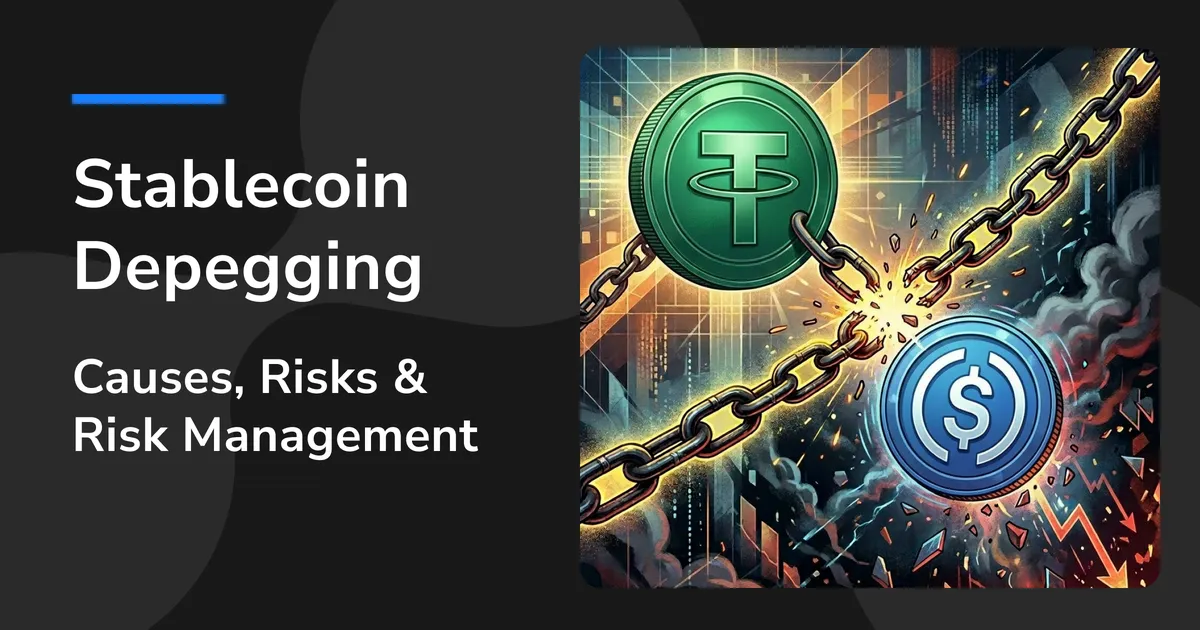
Stable currency decoupling is one of the risks investors are most concerned about in the cryptocurrency market, where a stablecoin fails to maintain a fixed exchange rate with a fiat currency. This situation not only affects the value of the portfolio, but it is also likely to trigger a chain reaction across the cryptocurrency ecosystem. For users who are considering investing in stablecoins or already holding stablecoins, a deeper understanding of decoupling mechanisms, historical scenarios, and how risk is assessed is an important issue in protecting asset security.
What is stablecoin decoupling? Basic Concepts and Operating Mechanisms
Simply put, it is the phenomenon that the market price of a stablecoin deviates from its anchored target.
Most stablecoin designs aim to maintain a 1:1 exchange ratio with the US dollar, which is often seen as a decoupling when the market price is below $0.95 or above $1.05.
This departure may be temporary market volatility and may reflect deeper structural issues.
Stabilizers rely primarily on three mechanisms to maintain price stability:
French currency mortgaged by holding equivalent fiat currency or government bonds as a reserve;
Cryptocurrency mortgage-type crypto assets that use excess collateral;
Algorithmic stablecoins automatically adjust supply through smart contracts.
Each mechanism has its advantages and vulnerabilities, and understanding these differences helps assess the risk of disengagement.
Detachment risk assessment for different types of stablecoins
| Stablecoin Type | Collateral Mechanism | Depeg Risk Level | Primary Risk Factors | \n
|---|---|---|---|
| Fiat-Collateralized | Fiat Currency/Government Bonds | Low | Regulatory risk, transparency issues | \n
| Crypto-Collateralized | Over-collateralized crypto assets | Medium | Collateral price volatility, liquidation risk | \n
| Algorithmic Stablecoin | Smart contract adjustment | High | Market confidence, liquidity shortage | \n
| Hybrid | Multi-mechanism combination | Medium-Low | Complexity risk, mechanism failure | \n
Price Impact of Stable Currency Uncoupling: Market Chain Effects Analysis
The stablecoin decoupling affects prices far beyond surface numbers, and its chain effects can ripple across the cryptocurrency ecosystem.
When a major stablecoin detaches, the first impact is decentralized finance (DeFi) agreements, as these platforms rely heavily on stablecoins as a source of liquidity and value anchor.
A de-coupling event would cause massive fluctuations in borrowing rates within the agreement, affecting billions of dollars of funding allocations.
Ready to start investing in crypto?
Join ZONE Wallet and get started easily with just NT$10 a day!
Download ZONE Wallet NOW!The impact of decoupling on the trading market is mainly manifested in three levels:
First of all, the emergence of arbitrage opportunities, when the price of a stablecoin deviates from the anchor value, professional traders make large margin trades, increasing price volatility;
Second is the shake-up of investor confidence, especially institutional investors who may redeem large amounts of funds;
Finally, the spread of the liquidity crisis, where uncoupling pressure can lead to liquidity depletion of the relevant trading pairs.
Price transmission mechanism for off-hook events
- Direct Impact: The price of the stablecoin itself deviates from the anchor value, causing loss of the holder account
- DeFi Protocol Impact: Abnormal borrowing rates, volatility in liquidity mining income, increased liquidation events
- Transaction impact: Cryptocurrency transactions priced in this stablecoin have a price distortion
- Market sentiment contagion: Investor panic spreads to other stablecoins and crypto assets
- Outflows of Institutional Funds: Large investors reduce crypto allocations, impacting overall market liquidity
QUANTITATIVE ANALYSIS: THE RELATIONSHIP BETWEEN DECOUPLING AND MARKET INFLUENCES
According to historical data analysis, the degree of stablecoin decoupling and market impact is non-linear.
When the decoupling margin is below 2%, the market is usually able to repair itself and the gap mechanism works effectively;
Panic selling begins when the decoupling margin reaches 5-10%, and related DeFi protocols face liquidity pressure;
A decoupling of more than 10% tends to trigger systemic risk, which can lead to a complete loss of market confidence in stablecoins.
History of stablecoin decoupling: major events review and lessons
A history of stablecoin decoupling provides investors with valuable risk identification experience.
The TerraUSD (UST) crash in May 2022 was the most representative case in which the algorithmic stablecoin, which had reached $180 billion in market capitalization, lost its anchor completely in a matter of days, and the price fell to near zero.
This incident revealed the vulnerability of algorithmic stablecoins in extreme market conditions and led the market to re-examine the reliability of different stablecoin mechanisms.
Another important historical event is the USDC decoupling crisis in March 2023.
At that time, due to the bankruptcy of Silicon Valley Bank, USDC issuer Circle was at risk in the bank's $33 billion reserve, causing USDC's price to drop once to $0.87.
Despite Circle's swift clarification of its funding security and gaining government support, this incident highlighted banking and regulatory risks even for bank-backed stablecoins.
Timeline of Major Disengagement Events and Impact Assessment
| Date | Stablecoin | Maximum Depeg | Duration | Primary Cause |
|---|---|---|---|---|
| May 2022 | TerraUSD (UST) | 99% | Permanent | Algorithm failure, mass redemptions |
| March 2023 | USD Coin (USDC) | 13% | 2 days | Bank failure risk, reserve concerns |
| June 2022 | Tether (USDT) | 5% | 1 day | Market panic, reserve transparency concerns |
| May 2021 | Tether (USDT) | 7% | 3 days | Crypto market crash, liquidity crisis |
Risk Management Principles Learned from Historical Events
- Distributed ownership: Do not concentrate your funds in a single stablecoin, it is recommended to allocate it in 2-3 different mechanisms stablecoins
- Monitor the transparency of the reserve: Regularly check the audit reports and reserve fund composition of stablecoin issuers
- Pay attention to market sentiment indicators: Warning signals such as capital rates, transaction volume anomalies, community discussion heat, etc.
- Set Stop Loss Mechanism: Timely adjust the holding ratio when the unhook margin exceeds the default threshold
- Understanding the underlying mechanism: In-depth study of collateral mechanisms and risk factors for stablecoins
How to Assess Stabilized Currency Uncoupling Risk: Useful Indicators and Monitoring Tools
Effectively assessing stablecoin deleveraging risks requires the establishment of a systematic monitoring framework.
The primary indicator is price divergence. It is recommended to set three warning lines of 0.5%, 1%, 2% and take appropriate action when the price deviates beyond these thresholds.
Trading volume aberrations are also important signals, and when a stable currency's 24-hour trading volume suddenly surges by more than 50%, it often signals a change in market confidence.
The capital rate is another key indicator, and under normal circumstances the capital rate for stablecoins should be close to zero.
When the rate remains negative and the absolute value exceeds 0.1%, it indicates that the market is under empty pressure on the stablecoin.
In addition, lending rate anomalies in DeFi protocols are also noteworthy, which may reflect liquidity tension or lack of market confidence if a stablecoin has a sudden spike in borrowing rates.
Stable Coin Health Assessment Framework
| Evaluation Dimension | Healthy Indicator | Warning Signal | Critical Signal |
|---|---|---|---|
| Price Stability | Deviation <0.5% | Deviation 0.5-2% | Deviation >2% |
| Trading Volume | Normal fluctuation | Sudden increase of 50% | Sudden increase of 100% |
| Funding Rate | Close to 0% | Negative >0.05% | Negative >0.1% |
| DeFi Lending Rate | <5% APY | 5-15% APY | >15% APY |
| Reserve Transparency | Regular audits | Audit delays | Refusal to audit |
Recommended Monitoring Tools and Platforms
- CoinGecko Stabilized Currency Zone: Provides real-time price, market value ranking and fundamental analysis
- DefiPulse: Monitor Stable Coin Usage and Liquidity in DeFi Protocols
- Dune Analytics: Customized data panel to track on-chain indicators for specific stablecoins
- TradingView: Set price alerts, monitor technical indicators and trading volume anomalies
- Official Transparency Page: Direct focus on provisioning reports and audit information provided by issuers
RISK MANAGEMENT STRATEGIES: HOW TO PROTECT ASSETS FROM DECOUPLING
Establishing an effective risk management strategy is key to preventing stablecoin decoupling losses.
Diversification of asset allocations is a priority, and it is recommended to allocate stablecoin assets in at least three different types of stablecoins.
Includes a fiat mortgage type (such as USDC), a cryptocurrency mortgage type (such as DAI), and an appropriate amount of traditional hedge assets.
This configuration can effectively reduce the impact of a single stablecoin decoupling on the overall portfolio.
DYNAMIC ADJUSTMENT STRATEGIES ARE EQUALLY IMPORTANT. WHEN THE MARKET SHOWS ABNORMAL SIGNALS, THE POSITION HOLDING RATIO SHOULD BE ADJUSTED IN A TIMELY MANNER.
For example, when monitoring a stablecoin for price deviations or trading volume anomalies, you can reduce the allocation ratio of that stablecoin from 40% to 20% and transfer funds to a more stable alternative.
At the same time, it is recommended to keep 10-15% of the funds in traditional financial instruments, such as government bonds or highly rated corporate bonds, as the ultimate hedge.
Phased Risk Response Strategies
- Preventive phase: Create diversified configurations, regularly check reserve gold reports, set price monitoring alerts
- Early warning: When the deviation reaches 1%, reduce the position of the stablecoin by 30% and closely monitor market dynamics
- Risk upgrade: When the deviation exceeds 2%, clear the stablecoin position and transfer to another stable option
- Crisis management: Pause new investments during market panic, prioritize the safety of existing assets
- Recovery phase: After waiting for the market to stabilize, re-evaluate the performance of each stablecoin and adjust the long-term allocation strategy
Future Trends: Impact of Stable Currency Regulation and Technological Developments on Off-Hook Risk
As the global regulatory environment becomes clearer, the nature of stablecoin decoupling risk is changing.
Major economies such as the US, EU and other countries are developing specific stablecoin regulatory frameworks that require issuers to provide greater transparency and provisioning safeguards.
These regulatory measures are expected to reduce the risk of deleveraging of bank-backed stablecoins, but may also increase compliance costs and affect market competitiveness.
Technology innovation is also reshaping the stablecoin ecosystem.
The next generation of stablecoins adopts more advanced risk management mechanisms, including real-time margin certificates, multiple collateralized portfolio combinations, and improved algorithmic adjustment mechanisms.
The development of central bank digital currencies (CBDCs) is more likely to fundamentally change the stablecoin market, providing government-backed digital currency options and reducing overall systemic risk.
Strategies for preparing investors for future changes
- Keep an eye on regulatory dynamics: Subscribe to relevant regulatory agency announcements to understand the impact of policy changes on stablecoin holdings
- Evaluate the application of new technologies: Study the technological innovations of emerging stablecoins to determine their risk reduction potential
- Preparing for CBDC Integration: Understand the progress of the digital currency development of each central bank and evaluate alternative investment options
- Create a flexible strategy: Maintain portfolio flexibility to adapt quickly to regulatory and technical environment changes
- Strengthening risk education: Continuous learning of stablecoin knowledge to improve risk identification and management
Conclusion: Practical advice for beginners investing in stablecoins
As an important infrastructure of the cryptocurrency market, stablecoins provide investors with a choice of digital assets that are stable in value.
However, the risk of getting unhooked is still a real problem that cannot be ignored. For newcomers who are just getting into the market, the following suggestions are worth a look:
- Start with a small amount: Familiar with the operation and market reaction of different stablecoins in advance with small amounts of capital
- Choose a Mainstream Stable Currency: Prioritize projects with large market capitalization, high transparency, and historical stability
- Distributed configuration: Do not concentrate all funds in a single stablecoin or single type
- Creating a Monitoring Mechanism: Set up price alerts and periodically check related risk indicators
- Maintain a learning mindset: Keep an eye on market dynamics and regulatory changes to improve risk identification
※ Stable currency investments require careful assessment of risk. Investors are advised to establish a complete monitoring mechanism, diversify their portfolios, and keep an eye on market dynamics.
Remember that no investment is completely risk-free and rational judgment and moderate allocation are the best strategies to protect assets.
What is ZONE Wallet?
ZONE Wallet is a Taiwan-based virtual asset exchange, allowing beginners to buy and sell easily with a single click. Combined with our dollar-cost averaging (DCA) feature, you can enjoy flexible, value-driven investment results!
ZONE Wallet also offers corporate account services with a fast and secure onboarding process. We help startups and enterprises leverage stablecoins to optimize cross-border payment workflows and reduce transaction costs. ZONE Wallet makes asset allocation more reliable for both personal financial management and corporate treasury strategies—helping you effortlessly navigate the future of Web3!
Start small to get comfortable with the process and risks.
Ready to dive into crypto?
[download-app]