Introduction to stablecoin lending, a new option for adding value to digital assets
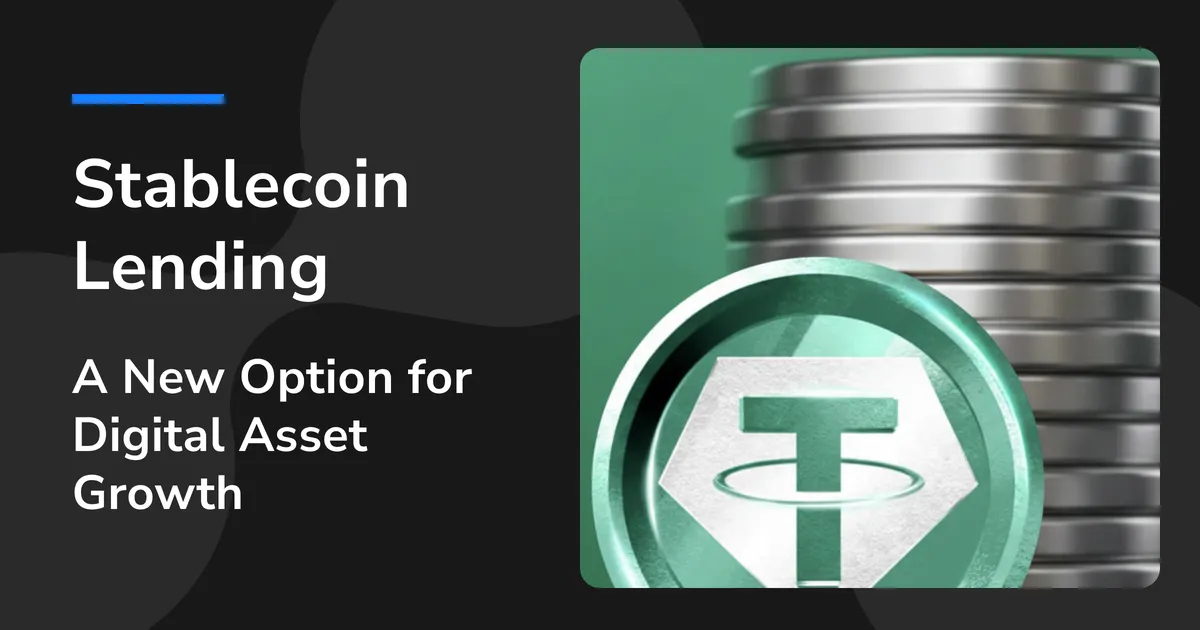
With the booming digital asset market, stablecoin lending has become an important strategy for investors to pursue stable returns.
In an environment of low interest rates in traditional financial markets, stablecoin lending provides a competitive income option that enables individual and institutional investors to earn relatively stable returns while controlling risk.
This article will take a deep look at the various aspects of stablecoin lending to help you make informed investment decisions.
Ready to start investing in crypto?
Join ZONE Wallet and get started easily with just NT$10 a day!
Download ZONE Wallet NOW!What is Stable Currency Lending? Learn about this emerging investment tool
What is Stable Currency Lending? Simply put, it is a way to lend the stablecoins you hold (such as USDT, USDC, BUSD, etc.) to other users or trading platforms and earn interest income from it.
Similar to traditional bank deposits, but often offer higher annualized rates of return.
The mechanism for stablecoin lending is established on a decentralized finance (DeFi) or centralized trading platform, pairing borrowers with lenders through smart contracts or platform mediation systems.
The core advantage of this investment approach lies in the price stability of the stablecoin itself.
Since stablecoins are often linked to fiat currencies such as the US dollar, the risk of exchange rate volatility is relatively low, so investors can focus on interest income without worrying about principal shrinking due to sharp fluctuations in cryptocurrency prices.
The major stablecoins on the market today include Tether (USDT), USD Coin (USDC), Binance USD (BUSD), and others, all of which are common hallmarks of stablecoin lending.
Principle of operation of stablecoin lending
The principle of operation of stablecoin lending can be divided into two modes of centralization and decentralization.
Centralized mode is mainly offered through cryptocurrency exchanges such as Binance, OKX and other financial products.
The platform lends stablecoins deposited by users to traders who need funds for leveraged trading or other financial operations.
Decentralized mode works through DeFi protocols such as Compound, Aave, etc., where users interact directly with smart contracts without the need for intermediaries.
Stable Currency Lending Ratio: Understanding Investment Size and Limits
Setup of stablecoin lending varies from platform to platform, and investors need to choose the right platform based on their capital size and investment strategy.
In general, centralized exchanges are more flexible for stablecoin lending, accepting anything from a small $100 to a large amount of millions of dollars.
For example, Binance's flexible financial products usually do not have a minimum amount limit, and regular financial products may have a minimum investment amount requirement.
For institutional investors, stablecoin lending tends to require a larger size of capital to obtain better interest rates.
Many platforms offer tiered interest rates based on the user's VIP level or size of funds.
For example, users with an investment of more than $10 million may enjoy a higher annualized rate of return than small investors.
At the same time, some platforms also set single-day or monthly investment limits to control liquidity risk.
Comparison of quota policies for different platforms
| Platform Type | Minimum Amount | Maximum Amount | VIP Benefits |
|---|---|---|---|
| Centralized Exchange | $100 | Unlimited | Yes |
| DeFi Protocol | $1 | Unlimited | No |
| Traditional Financial Institution | $10,000 | $1,000,000 | Yes |
※ For reference only
Stable Currency Lending Conditions: Entry Thresholds and Basic Requirements
Stable currency lending conditions are relatively simple, but investors still need to meet certain basic requirements.
First, you need to complete the platform's authentication (KYC), which is a necessary procedure for regulatory compliance.
Most formal platforms require users to provide identification documents, address proof, and more, and face ID verification may be required.
For large investors, the platform may require more detailed financial evidence or a description of the source of funds.
In addition to authentication, investors also need basic digital wallet operability and risk tolerance.
Although the risks of stablecoin lending are relatively low, technical risks, platform risks, and other uncertainties remain.
Therefore, platforms often require users to read and agree to relevant risk disclosures.
In addition, some high-yield stablecoin lending products may have regional restrictions and users in some countries or regions may not be able to participate in specific investment projects.
- Complete Platform KYC Authentication Process
- Have sufficient stablecoin assets as capital
- Basic digital wallet operation skills
- Understanding and Accepting the Investment Risk Terms
- Complies with the platform's regional service scope requirements
- Meet the minimum investment threshold (if set)
Technical Preparation and Operational Requirements
Participating in stablecoin lending also requires some technical preparation. For DeFi platforms, users need to install and operate digital wallets like MetaMask, understand how Gas fees are calculated, and how smart contracts work.
Centralized platforms are relatively simple and usually just need to complete registration and top up on the platform to start investing.
BEGINNERS ARE ADVISED TO START WITH A CENTRALIZED PLATFORM AND GAIN EXPERIENCE BEFORE TRYING DECENTRALIZED INVESTMENT OPTIONS.
Stable Currency Lending Risk: Important Considerations to Know Before Investing
While stablecoin lending carries a lower risk of price volatility relative to other cryptocurrency investments, investors still need to be fully aware of the risk factors involved.
Stable currency lending risks primarily include platform risk, technical risk, regulatory risk, and the decoupling risk of the stablecoin itself.
Platform risk is the most important factor to watch out for, including when an exchange goes down, a default, or a DeFi protocol is hacked, all of which can lead to a loss of capital for investors.
Technical risks are mainly present in DeFi protocols, where software vulnerabilities in smart contracts or blockchains can affect the proper functioning of investments.
Regulatory risks come from national governments' policy changes regarding cryptocurrencies, which could result in platform service interruptions or changes in investment conditions.
In addition, there are also downside risks to stablecoins themselves, such as the crash event of UST in 2022, reminding investors that even stablecoins are not completely risk-free.
Analysis of major risk types
- Platform Risk: Stock market closures, depleted funds, poor management
- Technical Risks: SMART CONTRACT VULNERABILITIES, BLOCKCHAIN NETWORK PROBLEMS, SYSTEM FAILURES
- Regulatory Risks: Policy changes, regulatory restrictions, changes in compliance requirements
- Liquidity risk: Unable to redeem funds in a timely manner, insufficient market liquidity
- Stable Currency Risk: Decoupling events, issuer credit issues, insufficient funds
- Interest Rate Risk: Changes in market interest rates affect return on investment
Risk Management Strategy
To effectively manage stablecoin lending risks, investors should adopt diversified investment strategies.
Do not concentrate all your funds on a single platform or a single stablecoin, but spread across multiple reliable platforms and different types of stablecoins.
When choosing a platform, priority should be given to platforms with a good reputation, high transparency, and insurance coverage.
At the same time, regularly monitor market dynamics and regulatory news and adjust your investment strategy in a timely manner.
Revenue Potential and Market Status
The annualized rate of return on current stablecoin lending is typically between 3% and 15%, depending on market demand, platform type, investment maturity, and more.
A centralized exchange's AGR typically has an annualized return of 3% to 8%, while regular products may offer higher returns.
The yield of DeFi protocols has a high volatility, which can exceed 15% when market demand is high, but can also drop below 5% when demand is low.
The main factors affecting yield rates include the market's demand for leveraged trading, the overall interest rate environment, and the availability of funds on specific platforms.
When the cryptocurrency market is active and traders' demand for borrowing money increases, yields on stablecoin lending typically rise.
Conversely, yields may fall during market downturns.
Investors should view stablecoin lending as a medium-term investment strategy rather than a short-term speculation tool.
Key factors for choosing a platform
Choosing the right stablecoin lending platform is the key to investing success. The primary consideration is the security and reliability of the platform, including the platform's operating history, regulatory compliance, financial protection mechanisms, and more.
Well-known centralized exchanges such as Binance and Coinbase often have better security measures and insurance coverage.
When it comes to DeFi protocols, the old brand protocols such as Compound, Aave, etc., have been verified by the market for many years and are relatively reliable.
Secondly, the competitiveness and stability of the yield is considered. While high returns are attractive, high returns tend to come with higher risks.
Investors should look for platforms with reasonable and relatively stable returns to avoid being tempted by unrealistic high returns.
In addition, the user experience of the platform, the quality of customer service, the ease of the outflow of funds, etc. are also important criteria for evaluation.
Platform Evaluation Checklist
- Platform Operating History and Reputation
- Regulatory Compliance and Licensing
- Capital Protection and Insurance Mechanism
- Yield Competitiveness and Stability
- User interface friendliness
- Customer Service Response Speed
- Funds Entry and Exit Fees
- Supported stablecoin types
Investment Strategies and Best Practices
Successful stablecoin lending requires a clear strategy.
For conservative investors, it is recommended to distribute funds to 2-3 reliable centralized platforms and choose flexible financial products to maintain liquidity.
Active investors can consider recurring products for higher returns while allocating a small portion of their funds to DeFi protocols for additional returns.
No matter which strategy is adopted, no more than 30% of total assets should be invested in stablecoin lending.
Regularly reviewing and adjusting your portfolio is also an important best practice.
As the market environment changes, the rates of return for different platforms and products are adjusted, and investors should be flexible in allocating funds to optimize overall returns.
At the same time, it is recommended to create investment records that track the actual earnings performance of each platform as a reference for future investment decisions.
Future Outlook and Development Trends
The stablecoin lending market is expected to continue to grow as the digital asset market matures and the regulatory environment becomes clearer.
The entry of traditional financial institutions will bring more liquidity and specialized services to this market.
At the same time, new fintech innovations, such as the development of central bank digital currencies (CBDCs), may present new opportunities and challenges for stablecoin lending.
Investors should remain focused on market developments and be prepared to adapt to the new investment environment.
As competition intensifies and markets mature, yields on stablecoin lending may gradually become more rational, but relative risks will also decrease.
In the long term, stablecoin lending is expected to be an important part of a digital asset portfolio, providing investors with a stable source of passive income.
Conclusion: Practical advice for newcomers to stablecoin lending
Stabilized currency lending provides investors with a relatively stable source of passive income, especially for users looking for low-volatility investment options in the cryptocurrency market.
For beginners who are just starting to get into the field, the following suggestions are worth a look:
- Start with a small amount: Test platform operation process and revenue situation with a small amount of money in advance
- Prioritize a centralized platform: Beginners recommend starting with an easy-to-operate, customer-supported centralized platform
- Diversified Investment Risk: Don't concentrate all your funds on a single platform or a single stablecoin
- Learn about product terms: Read carefully how investment product returns are calculated, redemption rules, and fee structure
- Continuous Learning Updates: The stablecoin market changes rapidly, keeping an eye on new trends and risks
Before embarking on your stablecoin investment journey, it's a good idea to start with a small investment, learn more about how each platform works, and stay tuned to market dynamics and risk changes to create a sound investment strategy that belongs to you.
※The above is for reference only. Stabilized currency investments require careful risk assessment. Investors are advised to establish a complete monitoring mechanism, diversify asset portfolios, and keep an eye on market dynamics.
Remember that no investment is completely risk-free and rational judgment and moderate allocation are the best strategies to protect assets.
What is ZONE Wallet?
ZONE Wallet is a Taiwan-based virtual asset exchange, allowing beginners to buy and sell easily with a single click. Combined with our dollar-cost averaging (DCA) feature, you can enjoy flexible, value-driven investment results!
ZONE Wallet also offers corporate account services with a fast and secure onboarding process. We help startups and enterprises leverage stablecoins to optimize cross-border payment workflows and reduce transaction costs. ZONE Wallet makes asset allocation more reliable for both personal financial management and corporate treasury strategies—helping you effortlessly navigate the future of Web3!
Start small to get comfortable with the process and risks.
Ready to dive into crypto?
[download-app]