SWIFT vs Blockchain Transfer|Comprehensive Comparison of Speed, Cost
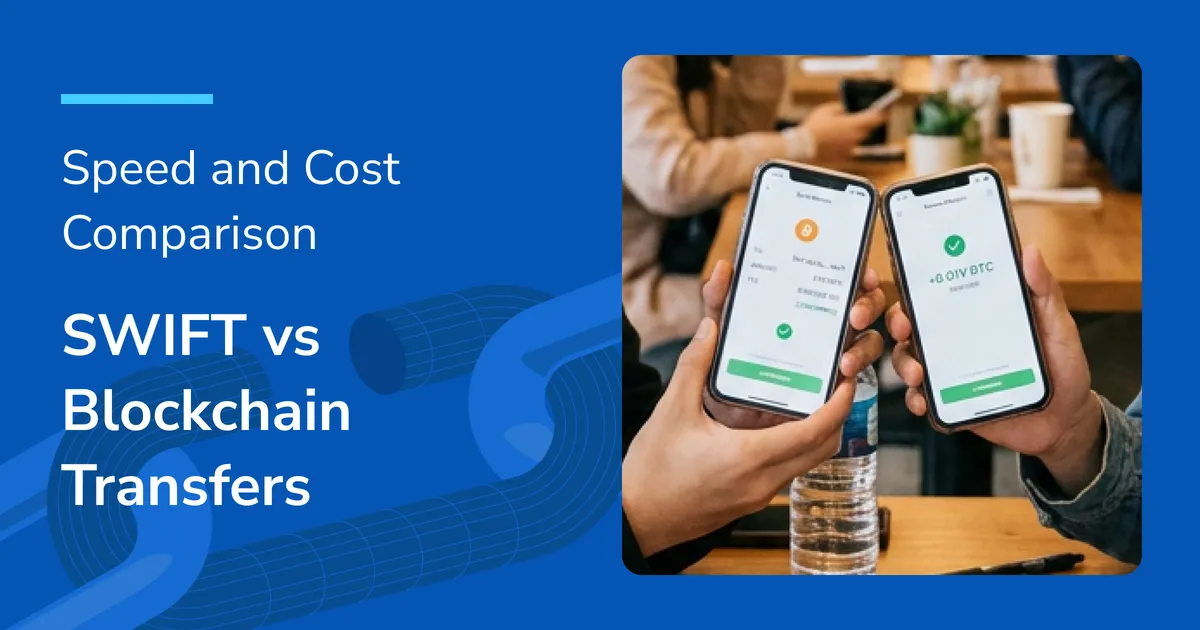
In a globalized business environment, businesses and individuals are increasingly demanding for “cross-border payments,” while traditional SWIFT remittances and emerging blockchain transfers are the two main ways to circulate international funds on the market today.
What is the difference between SWIFT and Blockchain Transfer? Which is faster? Lower cost? How do I choose the best cross-border payment method for you?
This comprehensive analysis of Speed, Cost, Security, and Application Scenarios will help you understand the difference between the two at a time.
What is SWIFT? Core system for traditional cross-border payments
SWIFT (Society for Worldwide Interbank Financial Telecommunication) is the standard communication system for international transfers between banks around the world.
When you make a cross-border transfer, the funds usually need to go through:
- Export Bank
- Intermediary Bank (1-3 rooms)
- Receipt Bank
This multi-level processing mechanism, while stable and mature, also comes with time and cost burdens.
SWIFT Features
- Global Banking Adoption
- Improved regulatory and regulatory mechanisms
- Suitable for large and formal business transactions
- The process is more tedious and slower
What is Blockchain Transfer? Next-generation cross-border payment technology
Blockchain transfer is through a decentralized network that allows funds to be transferred directly from the sender to the recipient without the need for an intermediary bank.
Common applications include:
- Cryptocurrency Transfer (BTC, ETH)
- Stable currency payments (USDT, USDC)
- Web3 Financial Applications (DeFi)
Blockchain Transfer Features
- Peer-to-Point Trading (P2P)
- Almost instant settlement
- Low Handling Fees
- High transparency and traceability
SWIFT vs Blockchain Transfer | Speed Comparison
SWIFT Money Transfer Speed
- Typical time: 1~5 working days
- Longer time if involving multi-national banks or holidays
- REQUIRES MAN-MADE AUDITS AND MULTI-LAYER VERIFICATION
Blockchain Transfer Speed
- Bitcoin: Approx. 10~60 minutes
- Ethereum: Approx. 1-10 minutes
- Stable currency (such as USDT): Complete in minutes
conclusions
Blockchain has an overwhelming advantage in speed, especially for scenarios where “real-time money flow” is required.
SWIFT vs Blockchain Transfer | Cost Comparison
SWIFT Cost Structure
- Export Banking Fees
- Intermediary Bank Fees
- Receive Bank Fees
- Exchange Rate Spreads (Hidden Costs)
The overall cost usually falls on:
3% ~ 7%
Blockchain Transfer Costs
- Gas Fee
- Platform or Wallet Service Fee (if applicable)
The overall cost is generally controllable in:
Less than 1% or even less
conclusions
Blockchain transfers are more cost competitive, with significant savings, especially for high-frequency or high-volume trading businesses.
SWIFT vs Blockchain Transfer|Comparison of Security and Risk
SWIFT Security
- Banking System Protection
- Regulatory Perfection (KYC/AML)
- Trackable transactions but less transparent
Blockchain Security
- Encryption technology protection
- Decentralization is irreversible
- Private keys are assets that need to be kept for themselves
Risk Differences
- SWIFT: Low process risk, but less efficient
- BLOCKCHAIN: TECHNOLOGICALLY SECURE, BUT OPERATIONAL RISKS NEED TO BE CONTROLLED
SWIFT vs Blockchain Transfer|Applicable Scenario Analysis
SUITABLE SCENARIOS FOR USING SWIFT
- Traditional business trading history
- Large Capital Transactions
- Full Financial Regulatory Records Required
- Deeply integrated business with banking
The best scenario for using blockchain transfer
- Cross-border eCommerce Receipt
- Free Recipients to Receive Foreign Payments
- High-frequency small payment
- Business model that requires fast checkout
The Role of Stable Coins: Key Drivers of Blockchain Payments
Stabilizers (such as USDT, USDC) solve the problem of cryptocurrency price volatility, making blockchain payments more suitable for commercial applications.
Its advantages include:
- Stable Value (Anchor USD)
- Fast cross-border transfers
- Reduce exchange rate risk
- Widely used for business payments
SWIFT vs Blockchain Transfer|Comparison Summary
Future Trend: Is Blockchain Payment Accelerating to Replace Traditional Patterns?
Advancing as the following developments:
- Stable Currency Popularity
- CBDC (Central Bank Digital Currency) Development
- Web3 Ecological Maturity
- Increasing demand for enterprise digital transformation
Blockchain cross-border payments are gradually moving from Alternatives to Mainstream Options.
Businesses in the future will no longer rely solely on SWIFT, but adopt a “hybrid payment model” to choose the best solution based on different needs.
Conclusion: How should businesses choose?
SWIFT AND BLOCKCHAIN TRANSFER ARE NOT INTERCHANGEABLE, BUT EACH HAS ADVANTAGES:
- Focus on Compliance and Stability → Choose SWIFT
- Focus on Speed and Cost → Select Blockchain
For modern businesses, the key is to:
How to integrate two payment instruments to create the most efficient cross-border money flow system.
This article is for general information and educational purposes only and is intended to compare the differences between SWIFT and blockchain transfers and does not constitute any investment advice, financial advice, legal or tax advice.
The costs, speeds and efficiencies mentioned in this article are summarised and may vary depending on banking policies, blockchain network conditions, exchange rate fluctuations and local regulations.
Readers are advised to carefully assess risk and consult with professional advisors before making relevant cross-border payments or fund operations to ensure compliance with their needs and compliance requirements.