What Are U.S. Nonfarm Payrolls? 6 Indicators and Market Impact
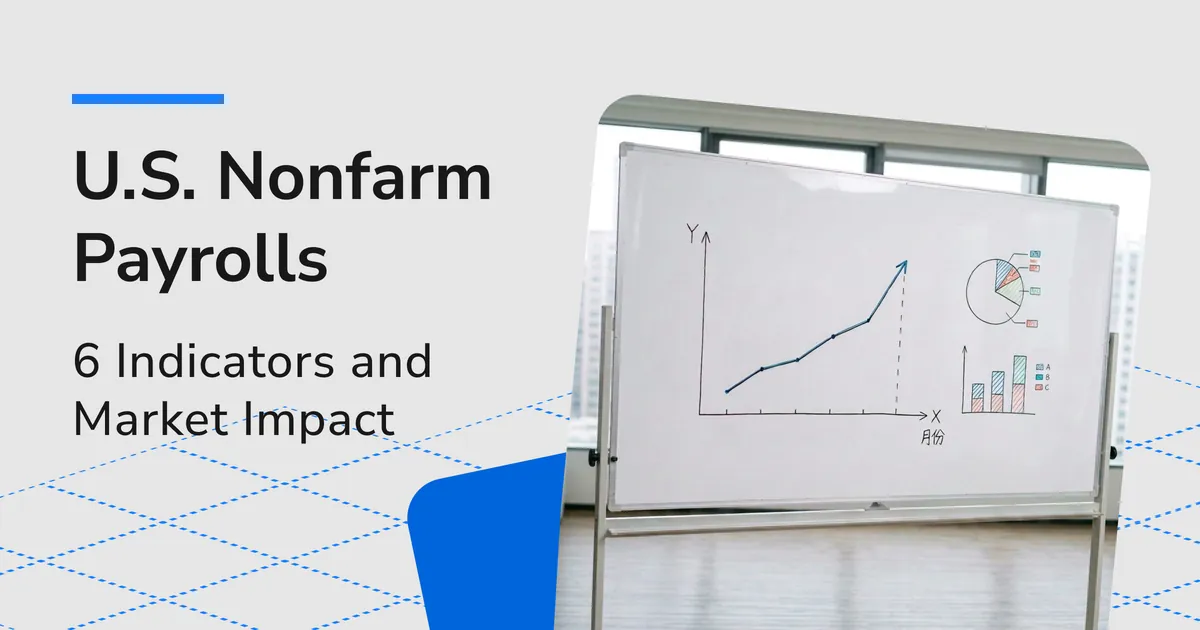
What Are U.S. Nonfarm Payrolls? 6 Indicators and Market Impact
The U.S. nonfarm payrolls report matters to investors in the dollar, stocks and Bitcoin because it brings together changes in jobs, unemployment and wages. It can also change expectations for Federal Reserve policy. However, strong payrolls do not automatically make every asset fall, and weak payrolls do not guarantee rate cuts or rising markets.
This guide explains what nonfarm payrolls are, when the report is released and how to read it. It then looks at the possible impact on the dollar, stocks and Bitcoin, as well as common trading risks around the release.
Stress-free investing for beginners!
Effortlessly build your assets with crypto starting at just NT$3 a day.
Download ZONE Wallet NOW!What Are Nonfarm Payrolls? NFP Counts Jobs, Not People
“Nonfarm” means employment outside the farming sector. It covers payroll jobs at most private businesses and government agencies, including manufacturing, construction, retail, hospitality, healthcare and government. Farm employment is separated because it can change sharply with seasons, weather and harvest cycles. Removing those swings makes the broader labor-market trend easier to see.
However, nonfarm payrolls do not include every type of nonfarm work. The official estimate excludes self-employed workers, private household employees and unpaid family workers. It measures jobs on payroll records, not the total number of people working in the United States.
Nonfarm Payrolls is commonly shortened to NFP. When markets discuss “new nonfarm jobs,” they usually mean how much the payroll-job estimate from the U.S. Bureau of Labor Statistics, or BLS, increased or decreased from the previous month.
The figure counts jobs on the payrolls of nonfarm businesses and government agencies, not individual people. Someone holding two jobs may be counted twice in the establishment survey.
The monthly Employment Situation report combines two surveys:
| Survey | Main source | Indicators beginners usually watch | Reading note |
|---|---|---|---|
| Establishment Survey (CES) | Payroll records from nonfarm businesses and government agencies | Nonfarm payroll change, average hourly earnings, average weekly hours and employment by industry | Counts jobs; a person with two jobs may be counted twice |
| Household Survey (CPS) | Survey of household members’ labor status | Unemployment rate, labor-force participation rate and employment-population ratio | Counts people; its scope differs from the establishment survey |
This is why payrolls can rise while the unemployment rate also increases. The figures come from different surveys with different scopes and methods. More people returning to the labor force to look for work can also temporarily raise the unemployment rate.
When Are U.S. Nonfarm Payrolls Released?
The U.S. Employment Situation report is generally released once a month, most often at 8:30 a.m. Eastern Time on the first Friday of the month. The exact date should still be checked on the BLS calendar. Because the United States observes daylight saving time, the release may fall at 8:30 p.m. or 9:30 p.m. in Taiwan.
For example, the September 2026 report is scheduled for October 2 at 8:30 a.m. Eastern Time, or 8:30 p.m. in Taiwan. After U.S. daylight saving time ends, the same 8:30 a.m. Eastern release corresponds to 9:30 p.m. in Taiwan. Always check the BLS release calendar for schedule changes.
How Are Nonfarm Payrolls Related to Federal Reserve Policy?
The Federal Reserve’s long-run goals include maximum employment and price stability, so the jobs report is an important input for economic and policy decisions. However, the Fed does not use one fixed threshold to decide whether to raise or cut rates. Its own guidance also notes that maximum employment changes with the structure of the labor market and cannot be measured by a single number. See the Federal Reserve’s explanation of monetary policy goals.
Markets often reason through the report this way:
- Jobs keep growing, unemployment falls and wage growth stays high: demand may still be strong, so markets may reduce expectations for a near-term rate cut or expect rates to stay high for longer.
- Hiring cools gradually while inflation also falls: the chance of easier policy may increase, but inflation and financial conditions still matter.
- Employment weakens quickly: rate-cut expectations may rise, but recession and weaker corporate earnings can become a larger concern.
- Employment and inflation send conflicting signals: policy becomes harder to read and market volatility may increase.
To understand how policy rates affect assets and everyday expenses, read How Do Interest Rate Hikes and Cuts Affect You?. You can also compare the benefits and risks of rate cuts with the effects of rate hikes.
How Can Nonfarm Payrolls Affect the Dollar, Stocks and Bitcoin?
| NFP combination | Common policy reading | Possible U.S. dollar response | Possible stock and Bitcoin response |
|---|---|---|---|
| Strong hiring, low unemployment and hot wage growth | Rates may stay high for longer | May strengthen | Rate-sensitive assets may face pressure, although economic resilience can support some stocks |
| Hiring cools gradually and wage growth slows | More room for rate cuts | May weaken | Liquidity expectations may provide support |
| Employment deteriorates quickly | Rate-cut expectations and recession concerns rise together | Direction may be mixed | Risk aversion and weaker earnings expectations may cause an initial decline |
U.S. Dollar: Rate Expectations Usually React First
- If payrolls keep expanding, unemployment falls and wage growth remains high, markets may expect rates to stay elevated. Short-term Treasury yields and the dollar may rise.
- If employment clearly weakens, the possibility of easier policy may increase and the dollar may come under pressure.
The dollar is also affected by foreign interest rates, safe-haven demand and market positioning. If weak jobs data trigger a global risk-off move, safe-haven buying can still lift the dollar. Taiwan investors can learn more in What Is an Exchange Rate?.
Stocks: Good News Can Be Bad News, but Bad News Can Also Be Truly Bad
- Strong employment can support household income, consumption and corporate revenue. But when markets are worried about inflation or high rates, an overheated labor market can lift yields and discount rates, putting pressure on rate-sensitive growth stocks.
- Cooling employment can support stocks by increasing rate-cut expectations. If the data are weak enough to raise fears of recession, unemployment and lower corporate earnings, stocks may still fall.
Bitcoin: Liquidity and Risk Sentiment Pull in Different Directions
Bitcoin trades around the clock and can react quickly to changes in rate expectations, the dollar and risk appetite when NFP is released.
- If the report raises rate-cut expectations, falling yields and a weaker dollar may support risk assets.
- If the report strengthens higher-for-longer expectations, Bitcoin may face pressure.
If weak data trigger recession fears, investors may first reduce exposure to volatile assets. Bitcoin is also affected by ETF flows, leverage liquidations, regulation and crypto-specific events. NFP is only one factor. For more long-term drivers, read Why Does Bitcoin’s Price Rise and Fall?.
These are common transmission paths, not fixed outcomes. Inflation, other data released at the same time, policy communication and market positioning can all change the actual response.
How to Read Nonfarm Payrolls in 6 Steps
News headlines usually lead with one payroll number, but a complete reading should cover at least six areas and place the latest month in a longer trend.
1. Payroll Change: Did the Number of Jobs Rise or Fall?
The payroll change shows how many nonfarm payroll jobs were added or lost during the month. Population and the labor force also change over time, so it is more useful to compare whether job growth has been speeding up or slowing down over several months.
2. Revisions: Were the Previous Two Months Revised?
The BLS routinely revises the previous two months as more employers report and seasonal-adjustment data are updated. If the latest month looks strong but the previous two months are revised sharply lower, the trend may be weaker than the headline suggests. The reverse can also be true.
Always compare the latest month, the previously reported figures and the revised figures.
3. Unemployment Rate: Are More People Jobless, or Are More People Looking for Work?
The unemployment rate is the share of unemployed people in the labor force and comes from the household survey. It does not include every person without a job in the denominator. Someone who is not actively looking for work or not available to work is generally not classified as unemployed.
Read it together with labor-force participation. If unemployment and participation both rise, more people may have returned to look for work. If unemployment rises while participation falls, the labor market may be weaker. A one-month change of only 0.1 percentage point can also reflect sampling noise.
4. Average Hourly Earnings: Is Wage Pressure Continuing?
Average hourly earnings are usually reported as both monthly and annual changes. Wage growth supports household income and spending. If it stays high while demand is overheated, markets may worry that service inflation will be slower to fall and adjust expectations for the pace of rate cuts.
The average can also move because the mix of industries changes. A sharp change in the share of high- or low-paying jobs can shift the overall figure.
5. Average Hours and Industry Breadth: Is Growth Broad or Concentrated?
Businesses may shorten hours and reduce overtime before cutting jobs. During a recovery, they may increase current employees’ hours before hiring more workers. Average weekly hours can therefore add context that job counts alone miss.
Also check whether job growth is concentrated in one or two industries or spread across manufacturing, construction, professional services, hospitality and government. Broader growth tends to support the view that the labor market is resilient, but each industry can still be affected by seasonal or one-off events.
6. Use a 3- to 6-Month Trend Instead of Defining the Economy by One Month
Payrolls and unemployment are survey estimates. They are affected by sampling error, seasonal adjustment and later revisions. Weather, strikes, school schedules and government changes can also distort one month.
A practical approach is to compare the three- to six-month average for payroll growth, the direction of unemployment and participation, and the pace of wage growth. Then check inflation, consumption and other economic data. This reduces the risk of reacting to monthly noise.
5 Risks Around the Nonfarm Payrolls Release
- Sudden volatility and slippage: prices can move within seconds, and market orders may fill far from the price shown on screen.
- Temporarily thinner liquidity: bid-ask spreads may widen, while crypto and derivatives markets can experience cascading liquidations.
- The headline may conflict with the details: strong payrolls paired with weak wages, higher unemployment or downward revisions can reverse the first market move.
- NFP is not the only policy input: inflation, central-bank communication, geopolitics, corporate news and positioning can all affect prices.
- Excessive leverage: leverage, margin and stop orders can amplify losses around an unpredictable release.
For most investors, setting an acceptable loss, avoiding unnecessary leverage, checking order types and diversifying are more practical than trying to guess one number.
Frequently Asked Questions About Nonfarm Payrolls
What Is NFP?
NFP stands for Nonfarm Payrolls. It usually refers to the monthly change in U.S. payroll jobs estimated by the BLS establishment survey. It counts payroll jobs at nonfarm businesses and government agencies, not the total number of employed people.
How Often Is NFP Released?
It is generally released once a month, most often at 8:30 a.m. Eastern Time on the first Friday of the month. Holiday schedules and official changes can shift the date.
Why Can Payrolls and the Unemployment Rate Move in Different Directions?
They come from different surveys. Payrolls use the establishment survey and count jobs, while unemployment uses the household survey and classifies people’s labor status. Participation and sampling error can also make the monthly directions differ.
Do Strong Payrolls Mean the Fed Definitely Will Not Cut Rates?
No. The Fed also considers inflation, wages, unemployment, financial conditions and other data. One month of payrolls does not determine a policy decision.
Does Weak NFP Mean Bitcoin Will Rise?
Not necessarily. Weak data may increase rate-cut expectations, but they can also raise recession and risk-aversion concerns. The dollar, yields, leverage, ETF flows and crypto-specific events also matter.
Is the ADP Employment Report the Same as Official NFP?
No. ADP uses its own private data and methodology, while official NFP comes from the BLS establishment survey. Their coverage and methods differ, so ADP is not a precise forecast of official payrolls.
Why Are Previous Payroll Figures Revised?
Some employers have not yet responded when the first estimate is released. The BLS revises the previous two months as more responses arrive and seasonal adjustments are updated. Annual benchmark revisions can also change a longer period of history.
What Is ZONE Wallet?
ZONE Wallet is a Taiwan-based virtual asset exchange, allowing beginners to buy and sell easily with a single click. Combined with our dollar-cost averaging (DCA) feature, you can enjoy flexible, value-driven investment results!
ZONE Wallet also offers corporate account services with a fast and secure onboarding process. We help startups and enterprises leverage stablecoins to optimize cross-border payment workflows and reduce transaction costs. ZONE Wallet makes asset allocation more reliable for both personal financial management and corporate treasury strategies—helping you effortlessly navigate the future of Web3!
Start small to get comfortable with the process and risks.
Ready to dive into crypto?
[download-app]
Disclaimer: This article is for general education only and does not constitute investment, trading or personalized financial advice. It does not guarantee returns. NFP data and market prices can move quickly. Check official sources for the latest release schedule and figures, and consider your finances, liquidity needs and risk tolerance before investing.