How to Plan Your Asset Allocation: 6 Steps from Goals to Rebalancing
How to Plan Your Asset Allocation: 6 Steps from Goals to Rebalancing
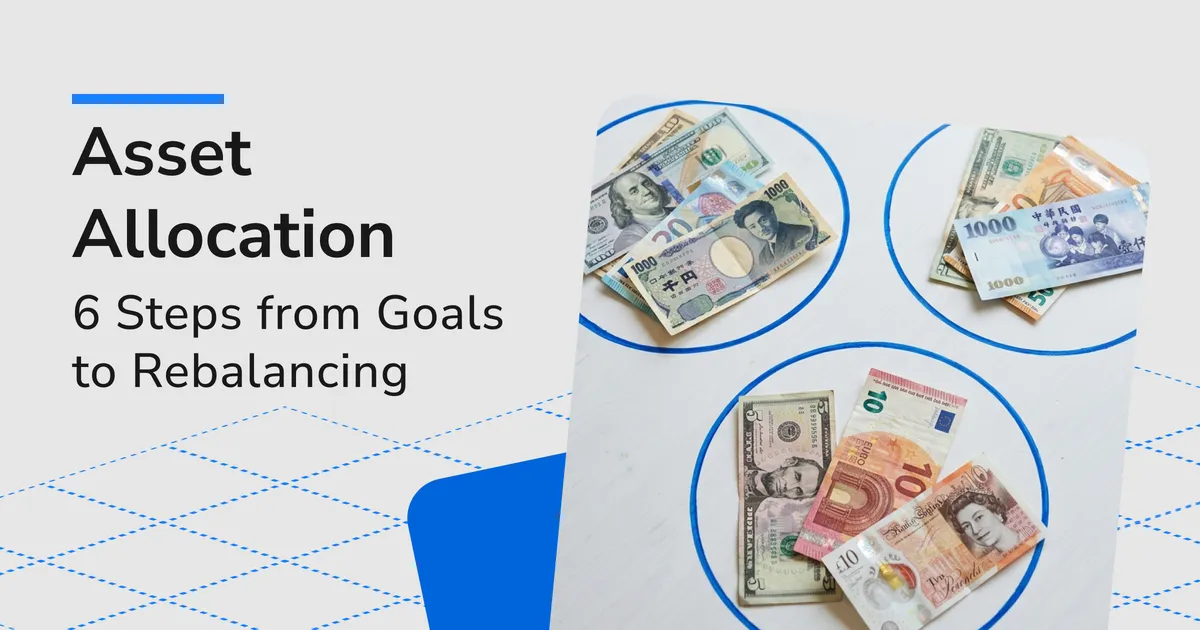
Asset allocation means deciding how to divide a sum of money among asset classes such as stocks, bonds and cash before choosing the products to hold. The aim is not to find “this year's best-performing investment.” It is to match each sum's purpose and spending date with the ups and downs you can afford to withstand. Investor.gov, the investor education website of the U.S. Securities and Exchange Commission, also notes that a suitable allocation depends on your time horizon and risk tolerance and may change with your stage of life.
So you do not have to begin by asking, “What percentage should I put in stocks?” A more useful order is to work out how much money you can invest, write down your goals and time horizons, consider what you could bear financially and emotionally if the market fell, and then assign a role to each asset class. There is no fixed ratio for everyone. Even one person may need different arrangements for an expense due in two years and retirement in 20 years.
You may also consider including crypto assets in your portfolio, but treat them as a potentially highly volatile holding, much as stocks can be, and assess whether and how to include them only after considering the loss you could bear. Emergency savings and money you will definitely need soon should not be pushed into a volatile market simply in pursuit of higher returns.
Stress-free investing for beginners!
Effortlessly build your assets with crypto starting at just NT$3 a day.
Download ZONE Wallet NOW!Before you allocate: separate the money you can invest
Start with your monthly income, essential spending, debts and irregular large expenses. Work out how much you can keep investing without disrupting daily life. Money in your account is not necessarily all available to invest: next month's insurance premium, tuition due in six months and emergency savings for unemployment or medical expenses each have a different purpose. Map your income and spending first, then consider investment percentages.
Emergency savings should be available when needed rather than optimized for the highest return. The amount depends on essential expenses, income stability and family responsibilities. If you have not built this buffer yet, read how much emergency savings to set aside and where to keep it.
It helps to distinguish two kinds of “cash.” One sits outside your investment portfolio and covers living expenses and surprises. The other sits within your portfolio for a known near-term goal or an upcoming payment. They may be held in similar types of accounts, but they serve different purposes and should not be counted twice.
Step 1: Write down your financial goals before choosing products
“I want to make money” is too vague to guide a decision about risk. Give each goal four fields: purpose, amount needed, expected date and amount already saved. For example, you may need a home down payment in two years, potentially face education expenses in seven years, and be accumulating assets for retirement over a much longer period. If an amount is uncertain, start with a reasonable range and revise it later.
Keep the goals distinct. Combining all your money in one account and applying the same ratio to an imminent payment and long-term retirement could force you to sell during a market decline when you urgently need cash. The result of this step is not a product shopping list; it is a map of your money by purpose.
Step 2: Check each goal's time horizon and access needs
Your time horizon is the earliest point at which you might need the money, not simply how long you hope to hold an investment. For an unavoidable near-term payment, the priority is having the required amount available on time. Longer-term goals may allow more time to withstand market fluctuations and let a plan unfold. But a long horizon does not automatically make a high-risk investment suitable: job loss, moving home or a change in family responsibilities may intervene.
A goal you can postpone also has a different capacity for volatility from a bill you must pay by a fixed date. You might adjust your retirement date or delay a trip, while tuition and a home purchase payment often have firm deadlines. A short-term goal invested in something whose price swings sharply may have to be sold at a loss. Do not use historical average returns as a promise of what you will receive when the bill comes due.
Step 3: Assess both your ability and willingness to take risk
Your ability to take risk asks what you can withstand financially: Is your income stable? Do you have high-interest debt? How many people depend on this money? Are your emergency savings sufficient? Would a loss affect essential spending? Your willingness to take risk asks whether you could stick to the plan emotionally. If a paper loss would keep you awake, prompt an immediate sale or make you abandon a long-term goal, theoretical financial capacity alone does not make a highly volatile allocation suitable.
Try a stress-test question: If my portfolio fell substantially before I needed the money, could I postpone the goal or use other funds, or would I have to sell? If you would have no choice but to sell, reduce that goal's dependence on volatile prices. For a closer look at financial capacity and emotional comfort, see five questions to assess risk tolerance.
Risk tolerance is not measured once for life. Reassess it when your job, income, debts, family responsibilities, health, time horizon or target amount changes.
Step 4: Decide what each asset should do before choosing percentages
Asset allocation is not about buying a little of every product. Give each holding a clear job:
- Cash and readily accessible funds: Cover near-term spending and provide liquidity, reducing the chance that you must sell investments at an inconvenient time. The trade-off is that inflation may erode long-term purchasing power.
- Stocks or stock funds: Offer exposure to business growth, but their prices can move sharply. Diversification can reduce the risk of one company; it cannot remove a broad market decline.
- Bonds or bond funds: May provide interest and a different source of risk from stocks, but they are still affected by interest rates, issuer creditworthiness, liquidity and exchange rates.
- ETFs: Are a way to obtain exposure to certain assets, not an asset class with one uniform risk level alongside stocks and bonds. A stock ETF, a bond ETF and a single-industry ETF may hold very different things.
- Highly volatile assets such as crypto: If you include them, define their purpose, the loss you could bear and the conditions under which you would exit. Do not invest your emergency savings in them.
Only then should you consider the weight of each asset class in your portfolio. To explore how goals, time horizon and risk can guide the proportions of stocks, bonds and cash, read how to approach a stock–bond allocation. This article does not prescribe one ratio for everyone. And owning several funds or ETFs is not necessarily true diversification if their underlying holdings overlap heavily.
Step 5: Compare the underlying exposure, cost and liquidity of each tool
Once each asset has a job, compare the products you could use. A product name is no substitute for checking what is inside it. Two funds with different names may hold the same large companies; several crypto assets may expose you to similar market risks. Examine underlying stocks or bonds, concentration by industry and region, and currency exposure. Then check fees, bid–ask spreads, trading restrictions and how easily you could sell when you need the money.
Ask at least four questions: What does this product actually hold? How might it lose value? What does it cost to hold and trade? Could I access the money at a reasonable price when I need it? For overseas assets, check whether exchange-rate risk fits the original goal. Do not choose solely by the past year's return, distribution yield or popularity ranking; none guarantees future results.
Step 6: Set a review and rebalancing rule
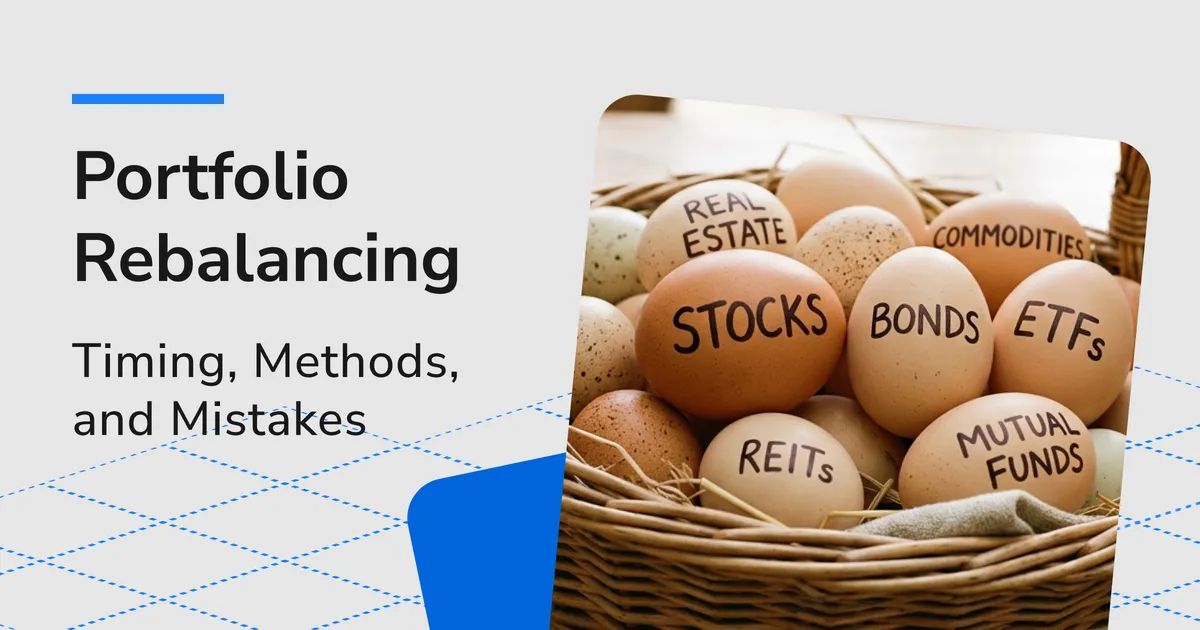
After you set an allocation, different assets rise and fall at different rates, so their weights drift from your original plan. Rebalancing means checking and adjusting that drift to keep the portfolio within a level of risk you are willing to take. It is not a prediction of what will rise next month. You can set a regular review date or check when a weight moves beyond a predetermined range. A review does not require a trade every time.
For example, if a rising stock holding grows well beyond its intended range, you might direct new contributions toward underweight assets or sell part of the overweight holding. The choice also depends on transaction costs, taxes, liquidity and whether you need cash soon. For fuller rules and calculations, see our guide to portfolio rebalancing.
If your goal, time horizon or ability to absorb losses has changed, revise your target allocation first instead of mechanically restoring the old percentages. Different asset returns can alter portfolio risk; neither diversification nor rebalancing guarantees that you will avoid losses.
Three situations, three different answers
Situation 1: A home down payment due in two years. Estimate the amount you must pay and the latest payment date. Identify how much of it cannot withstand a price drop close to that date. Having those funds accessible on time comes first. Even if stocks have delivered a higher average return over long periods, an average cannot guarantee your selling price in two years.
Situation 2: Retirement savings needed in 20 years. After setting aside emergency savings and near-term expenses, assess the long-term volatility you could withstand. Plan for continued contributions, distinct roles for your assets and regular reviews. A long horizon does not mean adding only highly volatile assets indefinitely. As the spending date approaches, reassess risk and liquidity.
Situation 3: Unstable income alongside a long-term goal. Even with retirement many years away, an interruption in income could force an early sale. Stabilizing cash flow, addressing costly debt and building emergency savings before deciding what you can invest consistently matter more than copying the stock–bond ratio of someone your age.
None of these situations calls for a universally recommended portfolio or percentage. If you have more than one goal, record the purpose and time horizon of each pool of money separately, then check whether your total exposure is duplicated or overly concentrated.
Four common asset-allocation mistakes
- Choosing a trending product, then finding a reason for it. Decide on the goal, time horizon and risk before choosing the tool; reversing that order can turn a portfolio into a list of popular products.
- Assuming that owning many funds means you are diversified. Different funds or ETFs may hold the same stocks, industries or countries. Check the underlying holdings, not just the number of products.
- Ignoring when you will need the money. Using a long-term investment for a payment due in two years could force a sale at exactly the wrong time.
- Treating rebalancing as a signal to chase gains or sell in panic. Reviewing weights against a rule you set in advance differs from changing your goal whenever prices move. Rebalancing manages risk; it does not guarantee a higher return.
Asset allocation FAQs
Is asset allocation the same as diversification?
Not quite. Asset allocation assigns roles to classes such as stocks, bonds and cash. Diversification then checks whether any class is too concentrated in one company, industry, region or source of risk. The two work together, but neither eliminates market risk.
Do I have to use a 60/40 stock–bond mix?
No. A 60/40 mix is a common illustration, not an automatic match for your time horizon, cash needs, risk tolerance or chosen products. Work through the six steps before deciding on an arrangement you can maintain.
Do I need an asset allocation if I do not have much money?
The first need is to distinguish what each sum of money is for, not to buy every asset class. With a smaller amount, covering living expenses, building emergency savings and deciding what you can contribute consistently matter more than forcing a mix of many products. Costs and bid–ask spreads still matter.
Does buying one ETF complete my asset allocation?
Not necessarily. An ETF is a tool. You still need to examine what it holds, whether it is concentrated in one market and whether it serves your goal. Even an ETF that holds many stocks may not address your near-term cash needs or your plan for bonds and other sources of risk.
How often should I adjust my allocation?
There is no frequency that suits everyone. Set a review date or an acceptable range of drift. If weights remain within that range, you may not need to trade. A change in your goal, income, debts or time horizon calls for reassessing the overall allocation, not simply returning to an old ratio.
Bottom line: let the purpose of your money guide the allocation
The most important part of asset allocation is not finding an attractive percentage. It is being able to explain what this money is for, when you will need it, how you would respond to a decline, what job each asset serves and when you will review the plan. Write those six answers into your own rules before choosing products. That is more useful for avoiding a mismatch between purpose and risk than copying someone else's holdings.
What is ZONE Wallet?
ZONE Wallet is a Taiwan-based virtual asset exchange that lets beginners buy and sell crypto assets in a few taps. Its recurring-purchase option offers another way to invest regularly as part of a flexible, long-term approach.
ZONE Wallet also serves business customers, helping startups and companies use stablecoins to streamline cross-border payments and reduce payment costs. Whether you are planning your personal finances or considering digital assets for your business, ZONE Wallet offers a way to explore the next stage of Web3.
Start small to get comfortable with the process and risks.
Ready to dive into crypto?
[download-app]
Disclaimer: This article is for general information and investment education only. It is not personalized investment, tax or legal advice, nor a recommendation of any particular product or asset mix. Stocks, bonds, funds, ETFs and crypto assets carry different risks, including loss of principal, price volatility and liquidity risk. Diversification and rebalancing do not guarantee that you will avoid losses. Consider your financial situation, the purpose of the money and the latest product documents before making decisions.