What Is Core-Satellite Investing? How Core and Higher-Volatility Holdings Work Together

What Is Core-Satellite Investing? How Core and Higher-Volatility Holdings Work Together
Core-satellite investing is a way to manage a portfolio by separating long-term, goal-aligned holdings (the core) from more targeted, higher-volatility, or lower-conviction ideas (the satellites). It is not a fixed allocation and does not guarantee a return. Its purpose is to give each investment a defined role and keep overall risk connected to your circumstances.
The approach can separate a long-term plan from the desire to participate in a theme, market, or new asset. Instead of allowing one view to redefine the entire portfolio, an investor can decide whether that view belongs in a limited satellite allocation. Before investing, make sure essential cash needs, emergency savings, and high-interest debt have been considered.
Looking to diversify your portfolio?
You can start small to explore crypto assets—get started easily with just NT$10 a day!
Download ZONE Wallet NOW!What do the core and satellite portions do?
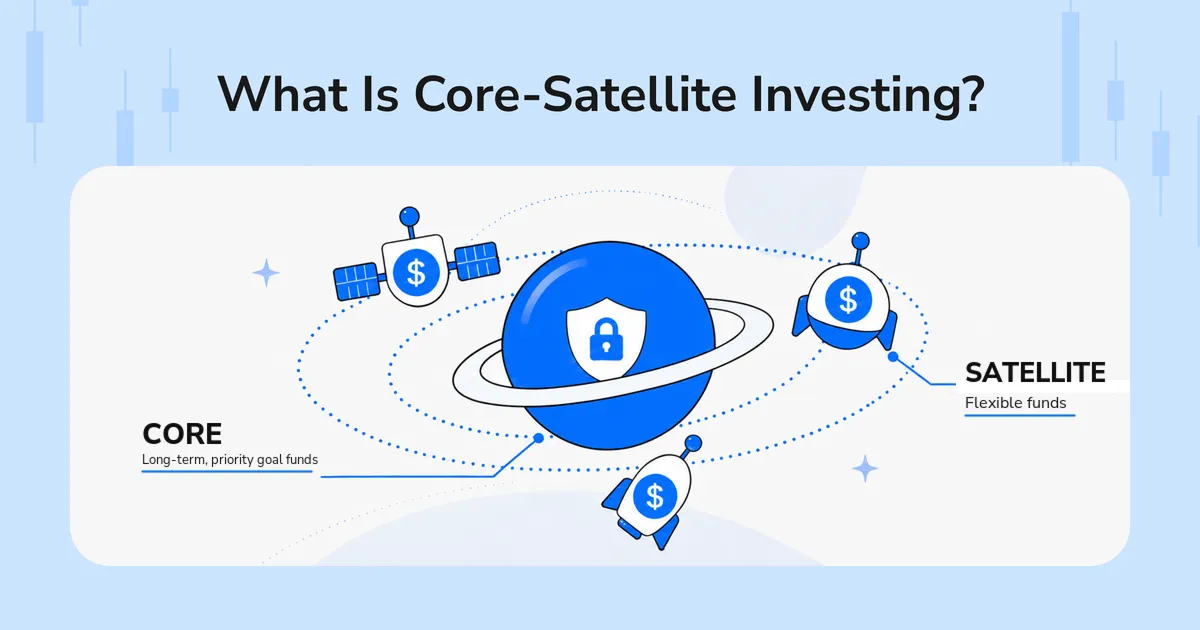
The core generally serves the portfolio's most important and longer-term goals. It is not risk-free; it should instead be understandable, suitable for the intended holding period, and consistent with cash needs and risk tolerance. It may include different asset classes or diversified funds, but no label automatically makes an investment a core holding.
Satellite holdings make room for specific views: a sector, country, factor, individual company, or higher-volatility asset. They should not be used to rescue core performance or as an unlimited account for short-term themes. Before buying, write down the thesis, the loss you could accept, when you will review it, and what would make you reconsider it.
Ask these four questions before building a core-satellite portfolio
1. What is this money for, and when will I need it?
Money that may be needed soon for living costs, health care, education, or a home purchase generally has less room for a volatile satellite position. The time horizon and purpose affect whether you can ride out a decline or might be forced to sell at an unfavorable time.
2. Does the risk I want to take match the risk I can take?
Wanting to try a volatile investment is different from being financially able to absorb its loss. Income stability, debt, family responsibilities, and emergency cash affect capacity for risk. Start with How to Assess Your Risk Tolerance before deciding whether a satellite allocation is appropriate.
3. Does the satellite actually create a different exposure?
Different names do not necessarily mean different risks. Two funds can be concentrated in the same large companies, sectors, or countries, and stocks, funds, and crypto assets can all fall together in stressed markets. Check major holdings, sectors, geography, leverage, and liquidity rather than merely counting products.
4. What will I do when the market moves sharply?
Core-satellite investing needs rules set in advance. A review date, an acceptable deviation range, or goal-based triggers can reduce emotional trading. If you could not tolerate a substantial short-term decline in a satellite, reduce its role or do not hold it.
A fixed percentage is not the answer
“A large core and a smaller satellite” is a framework, not a universal percentage. For some people, the core may represent most investable assets; for others, cash needs, retirement timing, or existing concentrated holdings leave less room for satellites. Any allocation should be explainable in relation to the investor's goals and overall risk.
If crypto assets are considered as a satellite, assess their price volatility, custody, platform, liquidity, and regulatory-change risks separately. Crypto is not an automatic diversification tool and should not be forced into a portfolio through borrowing or leverage. Consider it only within an amount you could afford to lose after understanding those risks.
How should a core-satellite portfolio be reviewed and rebalanced?
Rebalancing brings a portfolio back toward its intended asset allocation; it is not a prediction of the next winner. You might review at regular intervals or when holdings drift outside your own range, taking account of trading costs, tax, liquidity, and practical execution. A satellite that rises strongly can quietly become an oversized concentration risk, so it belongs in the rebalancing process too.
Keep a simple record at each review: the current core/satellite mix, each holding's purpose and risk source, why it has changed, and whether the original assumption still holds. For asset-class-level planning, read How to Build an Asset Allocation. For the roles of stocks and bonds and for rebalancing principles, see Stock-Bond Allocation and What Is Portfolio Rebalancing?.
Core-satellite investing FAQ
Must the core be an ETF?
No. An ETF may provide broad exposure, but you still need to review what it tracks, how concentrated it is, its costs, and its risks. A core is defined by its role in a long-term plan, not by the product name.
A satellite is performing well. Should I keep adding to it?
Return to the role and range you set originally. Strong performance can increase its share of portfolio risk; adding without review can allow a satellite to replace the core by accident.
Can a core-satellite approach eliminate risk?
No. Roles and diversification may help manage concentration and decision discipline, but market-wide declines, rates, currencies, liquidity, and personal cash needs can still affect results. They do not guarantee profits or prevent losses.
Do beginners need satellite holdings from the start?
No. If your goal, emergency savings, or risk tolerance is still unclear, a simple and understandable plan plus a regular review habit is generally more useful than immediately adding themes.
Conclusion: give every investment a clear role
Core-satellite investing is not about finding the most exciting satellite. It is about preventing one volatile judgment from taking over a long-term plan. Define your goal, time horizon, affordable loss, and review rules first; then decide whether a limited space for a specific idea is warranted.
This article is for general information and education only and is not investment advice, an offer, or a recommendation. All investments involve risk and values can rise or fall. Past performance does not guarantee future results. Assess your own circumstances carefully and consult a qualified professional when appropriate.
What is ZONE Wallet?
ZONE Wallet is a Taiwan-based virtual asset exchange, allowing beginners to buy and sell easily with a single click. Combined with our dollar-cost averaging (DCA) feature, you can enjoy flexible, value-driven investment results!
ZONE Wallet also offers corporate account services with a fast and secure onboarding process. We help startups and enterprises leverage stablecoins to optimize cross-border payment workflows and reduce transaction costs. ZONE Wallet makes asset allocation more reliable for both personal financial management and corporate treasury strategies—helping you effortlessly navigate the future of Web3!
Start small to get comfortable with the process and risks.
Ready to dive into crypto?
[download-app]
Sources and suggested internal links
- Investor.gov: Asset Allocation
- Investor.gov: Diversification
- Investor.gov: Rebalancing
- FINRA: Know Your Risk Tolerance
- ZONE:
assets-invest,risk-tolerance,stock-bond-allocation,portfolio-rebalancing,etf-selection-guide