What does "crypto liquidation" mean?
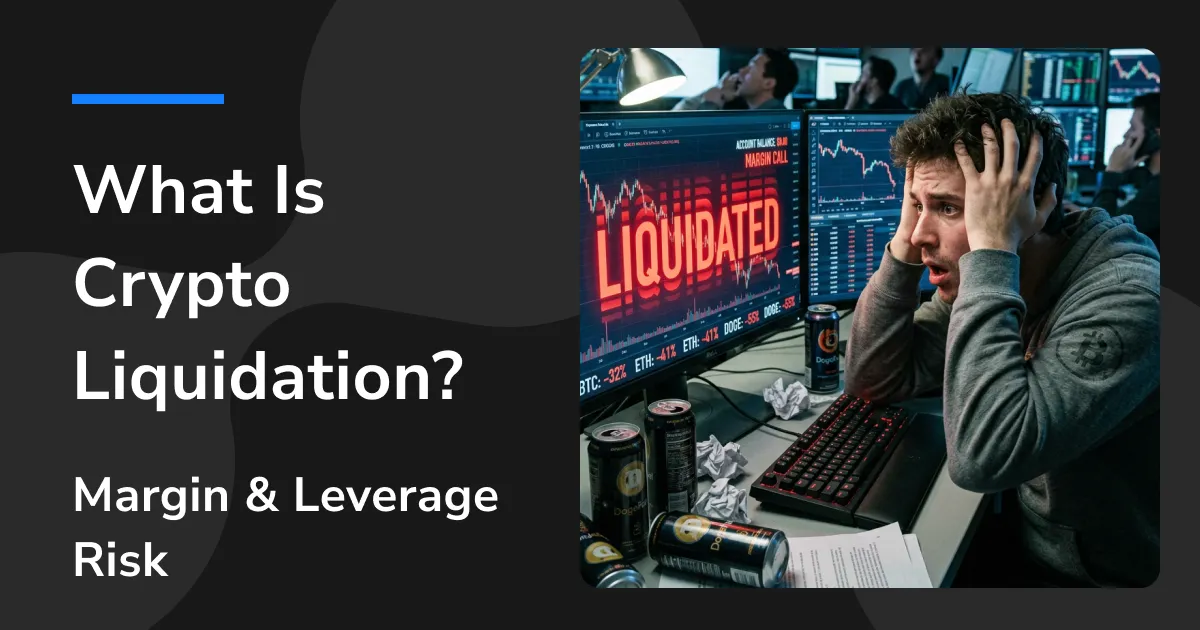
In the virtual currency market, the word “blowout” appears almost daily in news headlines or community discussions.
Many people lose badly because of the explosion, but there are also newcomers who understand the concept.
This article explains in detail what a virtual currency blowout means, why it happens, common scenarios, and how to avoid stepping into this mine.
Basic definition of blowout
Virtual Currency Explosion, in simple terms, when you use “Leveraged Trading” or “Contract Trading”,
Because the market price moves in an unfavorable direction, causing your margin to be insufficient to maintain your existing position,
The trading platform forces you to close your positions at market prices to control risk.
Once a position blows, your deposit may lose all of your deposit, and in some cases you may even owe the platform money (colloquially known as “stocking”).
Ready to start investing in crypto?
Join ZONE Wallet and get started easily with just NT$3 a day!
Download ZONE Wallet NOW!A word for another white word:
You borrow money from the exchange to increase your investment, and the result is that the price falls (or rises) above a threshold,
The exchange is afraid that you won't make a loss, so you have to sell your stake directly, and your principal will disappear.
Why do explosions occur? Understand Margin and Leverage
To understand an explosion, you must first understand two keywords:marginversuslevers。
- margin: Own funds that you actually put in, as collateral for the loan transaction.
- levers: A tool to magnify the transaction multiplier. For example, using 10x leverage means that you can trade contracts worth $10 on your behalf with a margin of $1.
Losses are amplified synchronously by leverage when the market moves against your expectations.
As soon as the amount of losses approaches your guaranteed amount, the platform activates a forced closing mechanism to prevent further expansion of losses (and affecting the security of the platform itself).
Simple example description
Suppose you invest a margin of 1000 USDT and open a20X LeverageBitcoin does multi-contract.
That means you've actually traded 20,000 USDT worth of Bitcoin.
- If Bitcoin PriceUp 5%: Your profit is 20,000 × 5% = 1000 USDT, equal to twice the capital.
- If Bitcoin PriceDown 5%: Your loss is 20,000 × 5% = 1000 USDT, equal to the loss of all your principal, at which time it willTriggering the explosion。
In other words, at 20x leverage, as long as the price fluctuates in the reverse direction by 5%, you will break out. The higher the leverage multiplier, the smaller the price volatility it can withstand.
Common Explosion Scenarios
1. Directions for making mistakes
This is the most direct cause of the explosion. You see a lot (do a lot) but the market falls big, or you look blank (do it) but the market goes up.
2. Needle sex
The virtual currency market often has a “needle” phenomenon — the price rises or falls in a very short period of time, and then quickly recovers.
This trend is often not caused by real trades, but by Oedo busts or exchange anomalies.
If your stop setting is not conservative enough, it may be swept out of action in an instant.
3. Seek highs and lows, emotional trading
When you see a surge in prices, you rush to open more and a fall, and often buy at the highs and sell at the lows.
Plus leverage, it's easy to get eaten up by short line bounces.
4. No downtime
Many newbies feel that “letting go will always go up”, but in contract trading, the market will not give you the time to wait.
Before the price has not returned to your cost price, you may already be out of stock.
What happens after the warehouse explodes?
- Total Margin Zero: The principal you put into the position will be completely lost.
- Position Forced Closure: You can no longer hold the part.
- Possibility of incurring liabilities (deleveraging): In extreme cases, if the price of the platform forces the closing of the position not as expected (for example, a momentary collapse without trading), you are likely to lose more than principal and owe the exchange money.
Most mainstream exchanges have “risk reserves” or “insurance funds” for this, but there is no guarantee that it will never happen.
How to avoid a warehouse explosion?
- Control leverage multipliers: Beginners are advised to start from 2-3 times, and even familiarize themselves with the market with no leverage spot trading first.
- Setup Downtime: Before entering, decide on the maximum acceptable loss margin and execute it.
- Avoid full warehouse operations: Reserve some funds as a buffer, do not squeeze all the principal at once.
- Follow market sentiment and news: MAJOR POLICY EVENTS, HACKING ATTACKS, EXCHANGE WITHDRAWAL SUSPENSIONS, ETC. CAN CAUSE SIGNIFICANT FLUCTUATIONS.
- Learn to Calculate Strong Affordable: Before entering, make it clear how much the price drops will blow, and assess whether you can bear it.
summed
A virtual currency breakout is essentially a risk realization mechanism under “leveraged trading”.
It's not a system error, nor bad luck — but when your losses exceed the margin, the trading platform has to take coercive measures to protect itself and other users.
A blowout can lose weeks or even months of accumulated profits.
Many veteran traders emphasize: in the virtual currency market,Living longer is more important than earning fast。
If you are not familiar with contract trading, it is recommended to start with spot trading, learn risk management step by step, before considering whether to use leverage.
Remember: the market is always there, the opportunity is always there.
But if you blow up, there may be no more chips involved.
What is ZONE Wallet?
ZONE Wallet is a Taiwan-based virtual asset exchange, allowing beginners to buy and sell easily with a single click. Combined with our dollar-cost averaging (DCA) feature, you can enjoy flexible, value-driven investment results!
ZONE Wallet also offers corporate account services with a fast and secure onboarding process. We help startups and enterprises leverage stablecoins to optimize cross-border payment workflows and reduce transaction costs. ZONE Wallet makes asset allocation more reliable for both personal financial management and corporate treasury strategies—helping you effortlessly navigate the future of Web3!
Start small to get comfortable with the process and risks.
Ready to dive into crypto?
[download-app]
※Disclaimer: This article is for teaching and knowledge sharing only, not investment advice.
Virtual currency and contract transactions are extremely risky and may result in a full loss of principal. Please do your own research and assess the risk carefully.
The author is not responsible for any transactions with the platform.