What Are Stablecoins? How They Work, Uses, Risks, and a Beginner Guide
A stablecoin is a crypto asset designed to stay near a reference value, most often one U.S. dollar. It moves on blockchains, but unlike Bitcoin its main purpose is usually pricing, transferring value, parking funds, or using decentralized finance rather than seeking price appreciation.
“Stable” does not mean risk-free. Reserve quality, redemption limits, issuer problems, smart-contract failures, or weak market liquidity can cause a stablecoin to depeg. A dollar stablecoin is also not the same as a bank deposit.
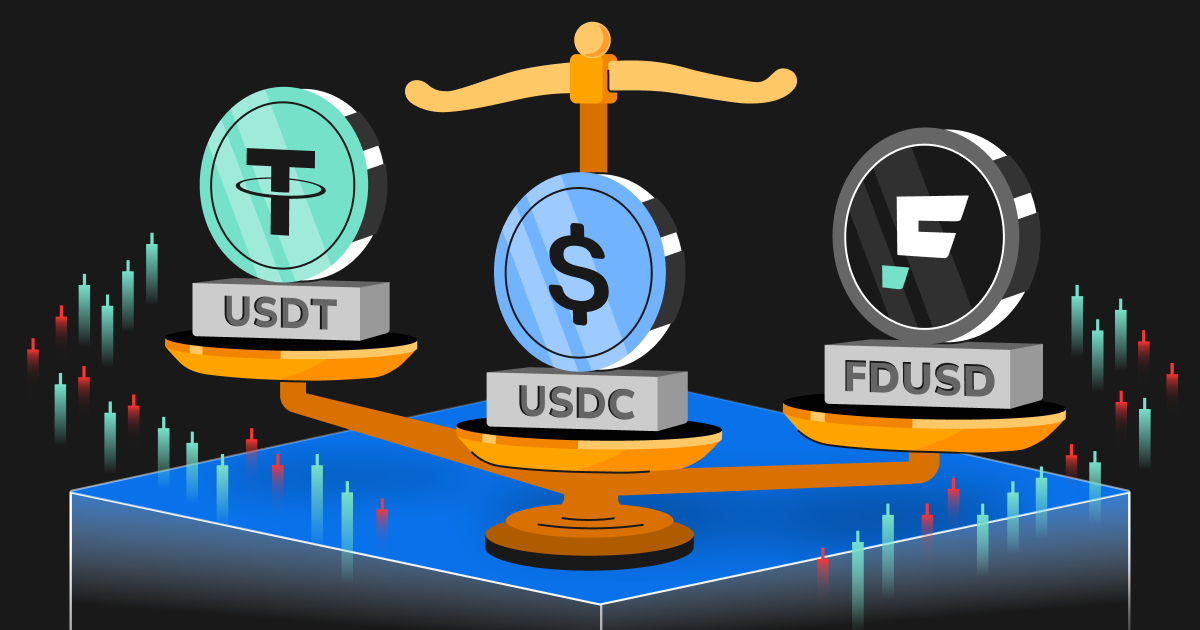
For category-level comparisons, see types of stablecoins. For USDT, USDC, and DAI/USDS, see our U.S. dollar stablecoin comparison.
What is a stablecoin, and how is it different from other crypto assets?
Most crypto assets are priced mainly by market supply and demand. Stablecoins instead use reserves, collateral, or protocol rules to try to return to a reference value. That is a design objective, not a guarantee.
How do stablecoins aim to maintain value?
- Fiat or liquid-asset reserves: an issuer holds cash, short-term government securities, or other reserve assets and manages issuance and redemption.
- Overcollateralized crypto assets: crypto collateral worth more than the stablecoins issued supports the system, alongside liquidation and governance rules.
- Algorithmic mechanisms: supply or token incentives try to maintain the peg; several historical designs have failed quickly.
Redemption and arbitrage may help restore a peg, but they may not work during a liquidity or confidence crisis.
What are stablecoins used for?
- Trading pairs and temporary liquidity parking
- Transfers and cross-border payments, with cost and speed depending on the network and service
- DeFi and smart contracts, which add protocol and technical risk
- Business settlement, subject to compliance, accounting, tax, and custody requirements
What are the main types of stablecoins?
- Fiat or liquid-reserve backed: USDT and USDC
- Crypto-collateralized: DAI and USDS
- Algorithmic: primarily reliant on supply or token mechanisms
- Commodity-linked: PAXG and similar tokens whose value follows a commodity rather than one dollar
See all four stablecoin categories, or read what USDT is.
Stablecoins vs. dollar deposits vs. Bitcoin
| Item | Stablecoin | U.S. dollar deposit | Bitcoin |
|---|---|---|---|
| Issuer or system | Private issuer or protocol | Banking system | Decentralized network |
| Price objective | Stay near a reference asset | Denominated in dollars | Market-driven |
| Deposit insurance | Usually none | Depends on bank and jurisdiction | None |
| Common uses | Pricing, transfers, liquidity parking, DeFi | Saving and payments | Investment, transfers, network asset |
| Key risks | Depegging, reserves, redemption, technology, regulation | Bank and currency risk | Price volatility and custody |
What risks do stablecoins carry?
- Depegging and market-liquidity risk
- Reserve quality, redemption access, and issuer risk
- Regulatory, freezing, and custody risk
- Smart-contract, bridge, wallet, and network-selection risk
Learn more about stablecoin depegging.
How should a beginner evaluate a stablecoin?
- Identify the reference asset and issuer or governance system.
- Review reserves or collateral and how they are disclosed.
- Check who can redeem directly and under what conditions.
- Compare liquidity, supported networks, and local rules.
Use our guide to stablecoin reserves and attestations rather than relying on a token name or market cap alone.
Ready to start investing in crypto?
Understand the risks first, then start small. ZONE Wallet offers a TWD entry point for exploring crypto assets, with DCA from NT$3 a day.
Download ZONE WalletHow is Taiwan regulating stablecoins?
Taiwan promulgated the Virtual Asset Service Act on July 22, 2026. It establishes a framework for stablecoin definitions, issuance approval, reserve assets, issuance, and redemption. Some or all provisions have not yet taken effect, so effective dates and detailed rules should be checked against the latest regulator announcements.
See Taiwan stablecoin regulation and the Virtual Asset Service Act.
Stablecoin FAQ
Can a stablecoin fluctuate or depeg?
Yes. Problems with reserves, redemption, liquidity, or market confidence can move its price away from the target.
Is a stablecoin the same as a dollar deposit?
No. A dollar stablecoin is generally a digital asset issued by a private company or protocol and usually is not a bank deposit or covered by deposit insurance.
What should I check before using one?
Check the reference asset, issuer or governance, reserves or collateral, redemption rules, liquidity, networks, and applicable regulation.
Conclusion: a stablecoin is a tool, not a guarantee
Stablecoins can reduce pricing friction for trading and transfers, but they still carry depegging, reserve, redemption, technical, platform, and regulatory risks.
What is ZONE Wallet?
ZONE Wallet is a Taiwan-based virtual asset exchange that helps beginners buy and sell with ease. Its dollar-cost averaging feature offers a more flexible way to build familiarity with digital assets.
ZONE Wallet also supports corporate clients, helping startups and businesses use stablecoins for cross-border payments and treasury workflows.
Start small to get comfortable with the process and risks.
Ready to dive into crypto?
[download-app]
Risk notice: Stablecoins aim to track a reference value but can still fluctuate or lose value because of issuer, market, technical, liquidity, or regulatory events. This material is for education only and is not investment advice or a promise of returns. Assess your finances carefully and use only funds you can afford to lose.